


If you see a flyer that appears to be from or connected to Southern California Edison, make sure to look twice. Some are impostors, trying to trick SCE customers into enrolling in or paying for programs that have nothing to do with SCE.
“We’re seeing more companies falsely claim a connection to SCE as they try to sell products or services,” said Peggy, an SCE information governance representative. “In some cases, these messages appear legitimate — using similar branding elements as SCE or calling out to Edison customers — but they’re really scams - Opens in new window.”
So far this year, customers have reported more than 130 incidents involving misleading claims by other companies that asked for bill or meter information, with some alleging ties to SCE. Others offered in-home “energy” or “meter” audits that promised to lower bills.
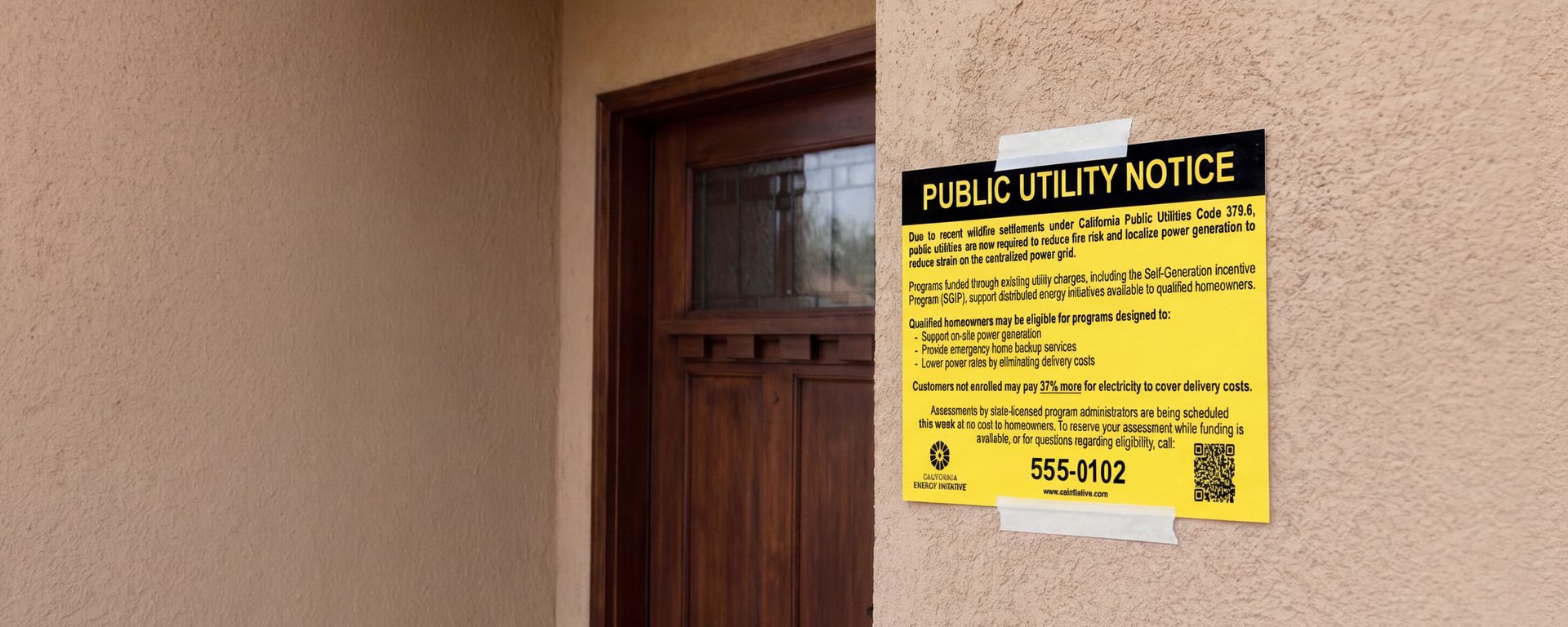
Suspicious flyers often use urgent language and official-looking designs to prompt quick action.
A recent wave of flyers included a mention of SCE’s Virtual Power Plant program (VPP) or the Self-Generation Incentive Program - Opens in new window (SGIP). As convincing as they may seem, they are not official SCE communications. A good way to call the bluff is by checking the programs’ websites — you’ll find that SGIP is closed to new applicants, so any messages soliciting signups are false. You’ll also see that Tesla is currently SCE’s only VPP partner, so any other claims of association are untrue.
“These tactics can be aggressive. We urge customers to stay alert and verify information through official SCE channels, such as our customer service line,” said Peggy.
To spot the fake messaging, watch out for these red flags:
- Unsolicited outreach: If you get a call, email, text or flyer from a sender you do not know, slow down. Take a good look. Be especially cautious if it uses SCE’s brand colors, logos or fonts in an attempt to look official.
- Pressure tactics: Be suspicious of messages that push you to “act now” or try to rush you into a decision.
- Requests for personal information: Be wary of anyone asking you to share SCE bill details or personal information such as your Social Security number, bank account information, passwords or passcodes.
How to protect yourself:
- Pause: Do not call numbers listed on unsolicited flyers. Do not reply to unexpected texts or emails. Do not click links, open attachments or scan QR codes from unknown senders.
- Verify: If someone says they are connected to SCE, check first. Call customer service at 800-655-4555.
- Protect your information: If you did not start the interaction, do not share identity details, financial information, passwords or passcodes.
- Save what you can: Take photos or screenshots of flyers, emails or texts. Save voicemails and callback numbers, and write down the dates and times.
If you think you’ve been targeted, stop responding and report it at sce.com/scamalert - Opens in new window.
Communications around scam safety are funded by ratepayers.


Saturday 7/11/26 had a scammer come to the house in Yucaipa to promote SCE free backup battery for upcoming power outages. Young white male, early twenties. No business cards, nothing official looking, just a photocopied SCE flyer.
Jul 11, 2026, 4:24:30 PMI saw this scam alert on Wednesday June 24th, and the very next day June 25th the postcard shown on SCE website was tape on my front door. Thank you, SCE, for alerting the public of this scam
Jun 25, 2026, 8:54:37 AMAre you promoting toilet replacement free of charge? Solicitor came by twice to schedule ASAP. I said no that I would hsve to check with landlord. Suspect scam
Jun 23, 2026, 1:16:05 PMEvery week we get people knocking on our door telling us to upgrade to solar as SCE will be increasing our rates. EVERY single WEEK. So tired of it.
Jun 19, 2026, 3:57:56 PM