Edison International Edison International
Energized
  • Home
  • Stories
    • All Stories
    • People
    • Safety
    • Giving Back
    • Technology
    • Environment
    • The Grid
    • Good to Know
    • Spotlight
  • Videos
    • All Videos
    • People
    • Safety
    • Giving Back
    • Technology
    • Environment
    • The Grid
    • Good to Know
  • Connect
      social media
      • View/Upload Photos
      • About Us
  • Resources
    • Edison.com
    • SCE.com
    • Newsroom
    • Clean Energy
    • Wildfire Safety
  • Subscribe
    • All Stories
    • People
    • Safety
    • Giving Back
    • Technology
    • Environment
    • The Grid
    • Good to Know
    • Spotlight
    • All Videos
    • People
    • Safety
    • Giving Back
    • Technology
    • Environment
    • The Grid
    • Good to Know
      social media
      • View/Upload Photos
      • About Us
    • Edison.com
    • SCE.com
    • Newsroom
    • Clean Energy
    • Wildfire Safety

Don’t Dig Blind, Call 811

Before you dig, call 811 to mark underground utility lines and avoid outages, costly repairs and injury.
Skip to content
Stories : Safety
Download Photos Download All
ESPAÑOL 한국어 中文 TIẾNG VIỆT
Break Ground, Not Utility Lines

Break Ground, Not Utility Lines

Darris McCoy spends a lot of time looking down — not because he's having a bad day, but because it's a crucial part of his job. He leads a team of locate technicians who map ...
View Story
Call Before You Dig

Call Before You Dig

Planning to dig? Don't make it a guessing game — call 811 to keep your summer projects drama-free. Without calling the national DigAlert hotline, there is no way of knowing ...
View Story
Tips to Stay Safe When Digging

Tips to Stay Safe When Digging

When should you contact 811? Anytime you plan to dig. The national call-before-you-dig number is a hotline that residents are required by law to contact before digging. The ...
View Story
Share LinkedIn
Share Facebook
Share X (formerly Twitter)
Email
Print
Subscribe

Call 811 before any digging projects to avoid hitting underground utility lines.

Break Ground, Not Utility Lines

Break Ground, Not Utility Lines

Darris McCoy spends a lot of time looking down — not because he's having a bad day, but because it's a crucial part of his job. He leads a team of locate technicians who map ...
View Story
Call Before You Dig

Call Before You Dig

Planning to dig? Don't make it a guessing game — call 811 to keep your summer projects drama-free. Without calling the national DigAlert hotline, there is no way of knowing ...
View Story
Tips to Stay Safe When Digging

Tips to Stay Safe When Digging

When should you contact 811? Anytime you plan to dig. The national call-before-you-dig number is a hotline that residents are required by law to contact before digging. The ...
View Story
View Comments
Leave a Comment
  • We welcome your feedback and comments. We ask that you please keep them constructive, civil and respectful. If you wouldn’t say it in front of your mother, then there is a good chance it falls outside of our guidelines. Please read our comment policy here.
Stories : Safety
Download Photos Download All
ESPAÑOL 한국어 中文 TIẾNG VIỆT

Don’t Dig Blind, Call 811

Before you dig, call 811 to mark underground utility lines and avoid outages, costly repairs and injury.
Jade Robinson
Jade Robinson
ENERGIZED by Edison Writer
Contributors
Infographic: Lawrence Tsuei
Photo Credit: Lisa Aubry
Published on August 11, 2026
Share LinkedIn
Share Facebook
Share X (formerly Twitter)
Email
Print
Subscribe

Beneath the streets you drive every day, there is a hidden maze of gas, electric, water and fiber lines lurking. Most people never think about it, but for Theo Romero, it’s constantly on his mind.

Romero is a utility locate technician for UtiliQuest. His job is to find buried utility lines and mark them before projects break ground — work that starts with a free call to 811.

“You never know what you’re going to get,” Romero said. “It could be as small as planting some new trees or as large as trenching to install a storm drain. Either way, they need to call us first.”
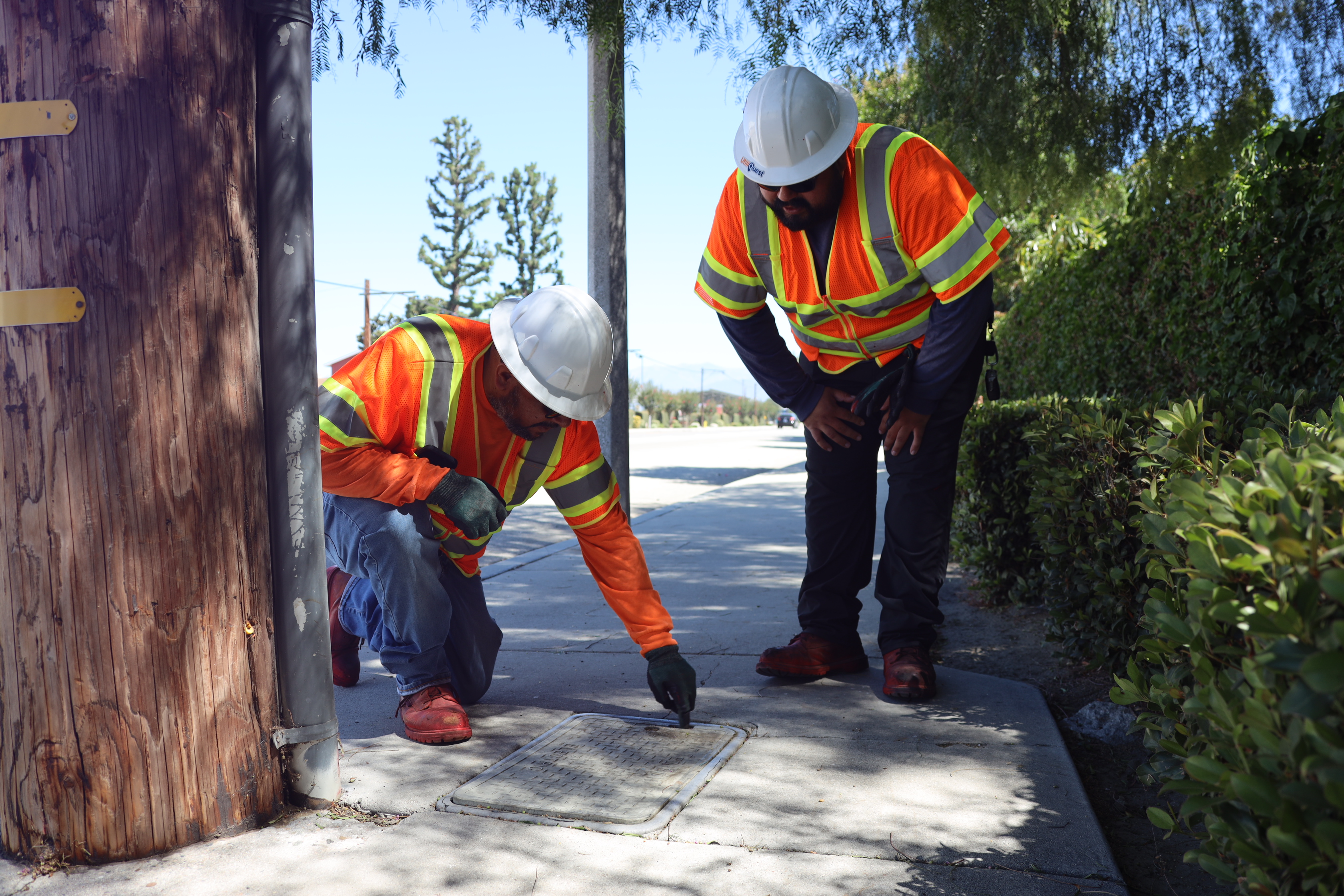
UtiliQuest locate technicians Theo Romero and Michael Serrano (l-r) mark the access point to a buried line.

Administered by DigAlert in Southern California, calling 811 is a a free, required notification step every homeowner and contractor should make at least two working days before digging.

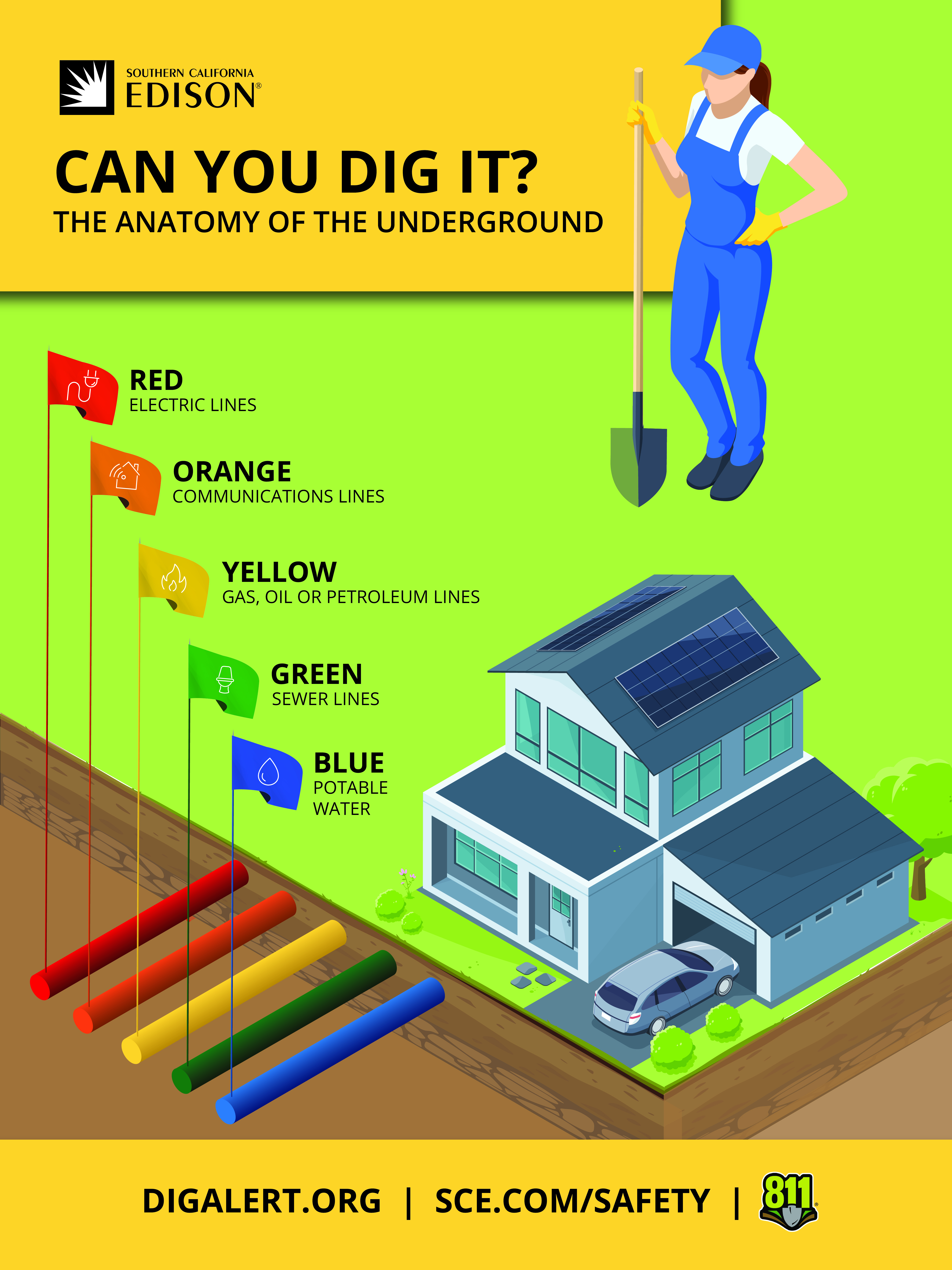
DigAlert will then generate a ticket that will get assigned to a locator like Romero with UtiliQuest, who will go to the site with paint and flags, ready to mark underground utilities — electric, power, water, gas and sewer — so no one digs blind.

One of his recent jobs sent him to Pomona, where the construction was more than a backyard home improvement project.

“The dig here will impact the entire community,” said Romero. “There is going to be a new gas line installed which will support and connect the new homes currently under construction.”
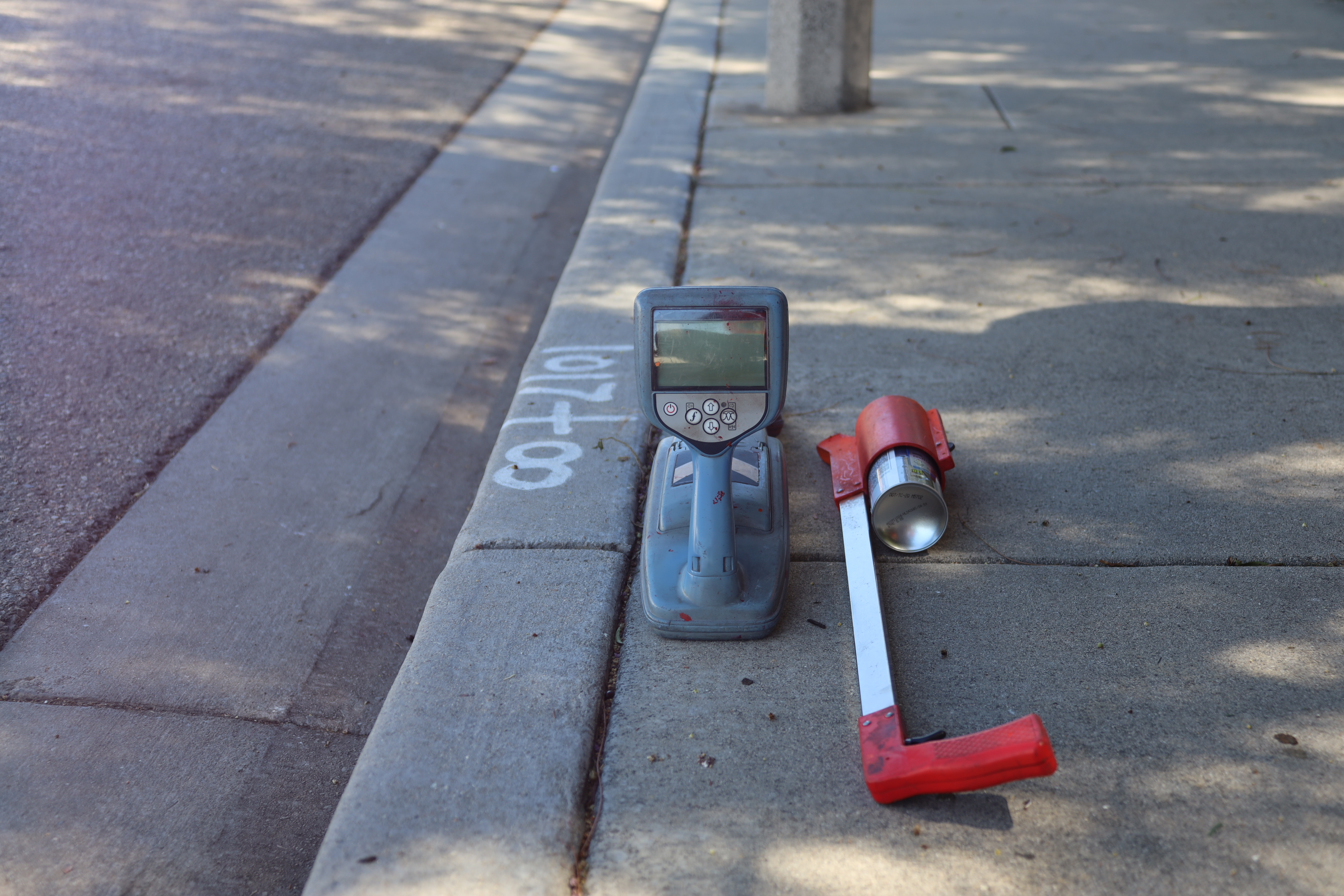
Utility line locating equipment traces the signal of a buried line, and then paint is used to mark its direction.

The first thing his crew looks for is white — the color of paint or flags a homeowner or contractor uses to let Romero’s crew know where they plan to dig.

“White marks are our bread and butter,” Romero said. “They show us exactly where the construction will take place, so we know the area to focus on.”

From there, GPS maps show nearby structures and roughly where each line runs, along with when it was installed. But maps can be outdated or incorrect.

“We need to know we’re in the right spot,” said Romero. “Sometimes the lines are not exactly where our maps say they will be, so we need to update that information”

When that happens, the crew connects specialized equipment to the line, traces the signal and paints or plants flags in the ground, turning what’s invisible below ground into something anyone can see.

UtiliQuest locator Theo Romero and his partner, Michael Serrano (l-r), trace the frequency of an underground utility line and mark it before crews begin construction.

When someone skips the call to 811, it can lead to underground utility damage and serious consequences, including power outages, costly repairs, fines and safety hazards like explosions and fatal injuries. Even a small nick of a line can be disastrous. If it happens, stop digging immediately and call 811 so a professional can inspect the line before a minor problem becomes a major one.

“Everyone should be using 811 before starting a project,” said Romero. “If you don’t, your whole project could be delayed for months, or worse, you could put yourself and your community at serious risk. There’s a whole team ready to help, just give us a call.”

Tips For Before You Dig

  • Call 811 or request a ticket online at least two working days ahead — it's free and required by law in the state of California.

  • Outline your dig area with white paint, flags or chalk to help guide the locator.
  • Be specific: When you or your contractor submit the ticket, describe exactly where the digging will take place.
  • Wait until professionals mark the lines, then dig at least 24 inches away from them.

  • Use hand tools when digging within 24 inches on each side of any marked utility lines.

  • Dig with caution — lines can sit just inches below the surface.

  • If you hit a line, even just a nick, stop digging and call 811 right away.

  • If there is any gas leak, water leak or electrical discharge, leave the area and call 911 immediately.

For more information, visit sce.com/safety.

Tags: 811 DigAlert, safe digging, underground utility lines

Call 811 before any digging projects to avoid hitting underground utility lines.

Connect with us

Edison International - Opens in new window

Visit SCE

  • Pay My Bill
  • Report an Outage
  • Turn On/Off Service

Family of Websites

  • SCE.com
  • energized.edison.com
  • CAREERS
  • PRIVACY NOTICE
  • WEBSITE TERMS OF USE
  • CA Consumer Privacy Act Policy
  • © 2026 Edison International

This website and communications are funded by shareholders unless otherwise noted.

Download and Use Policy

This Site is owned by Edison International. Unless otherwise indicated, all of the content featured or displayed on this Site, including but not limited to, text, graphics, data, photographic images, moving images, sound, illustrations, computer code, trade marks and logos and the selection and arrangement thereof (referred to in this section as the "Content") is owned by Edison International, its licensors or its third-party image partners and all rights in relation to the Content are reserved. All Content is protected by copyright, trade dress, moral rights, trade mark rights and other laws relating to the protection of intellectual property. You may use the Content for your personal, or news-related, non-commercial use, but you may not otherwise reproduce, modify or in any way commercially exploit the Content.

Accept   Decline