

SCE Helps Protect Sequoia National Park


SCE Helps Protect Sequoia National Park

Spread across more than 600 square miles of the Sierra Nevada, Sequoia National Park is known as a sanctuary of giants, home to some of the world's largest trees — but its densely wooded forests also face a significant wildfire risk.
SCE crews replace 23 poles and 2 1/2 miles of wire as part of a wildfire safety upgrade project in Sequoia National Park.
Harnessed in and flown out to remote mountainsides in the park, Southern California Edison crews are working to reduce that risk, completing wildfire safety upgrades on equipment impossible to reach on foot.
“This is incredibly treacherous and steep terrain,” said Les Carranza, a training crew foreman at SCE who is leading the project. “We can’t get trucks out there, so we have to fly everything in, including the linemen.”
The equipment — which powers the park itself, a lodge, employee housing and a museum — was originally installed with the help of mules when the landscape was still somewhat accessible on foot. Today, after years of new growth, hiking in would be too dangerous and take nearly six hours round trip.
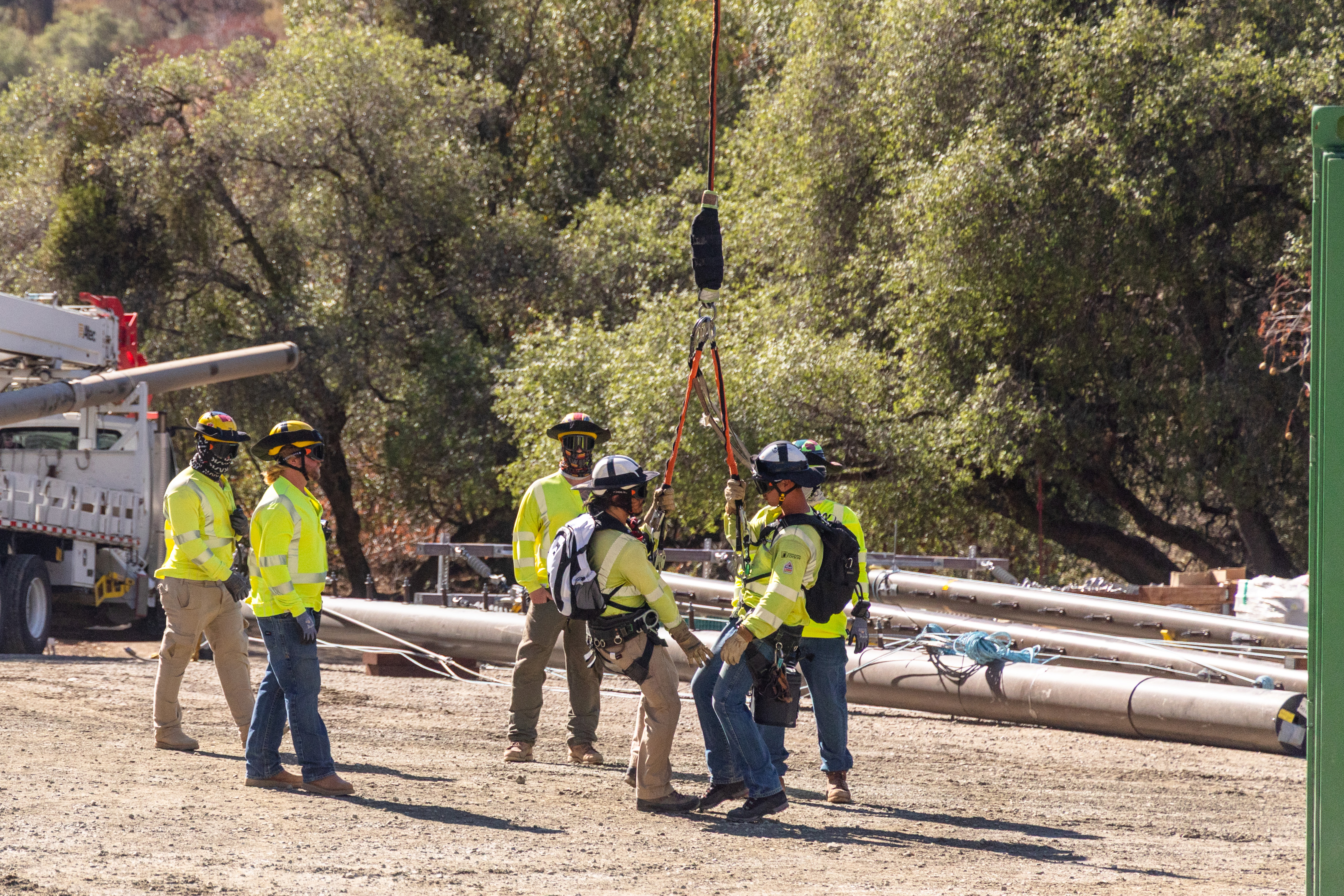
SCE lineworkers strap into a harness beneath a helicopter that will fly them to remote mountainsides in Sequoia National Park.
Instead, using a technique called human external cargo, crews pair up and attach to a long line beneath a helicopter, which drops them off at the base of a tower or other equipment. There, they replace the original, aging structures with newer fire-resistant equipment and swap out the bare line for coated wire, known as covered conductor.
“If a tree branch or something were to hit the lines, the covered conductor would help prevent it from sparking,” said Vinnie Sanchez, an SCE e-crew foreman from Tulare who has been working on the project for a few weeks. “These upgrades are making it safer for everyone in this community.”
At elevations ranging from 2,500 to 7,000 feet, the project includes replacing 23 poles and 2 1/2 miles of conductor.
“Not everyone gets to do this,” said Sanchez. “It is a really unique job that a lot of lineworkers may never experience in their career.”
Because it's so rare, Carranza is using it as a learning opportunity. While he oversees the Tulare region training crew, he has invited all training crews throughout SCE to rotate in, so more lineworkers can get exposure to this type of work and develop the skills needed for similar projects in the future.
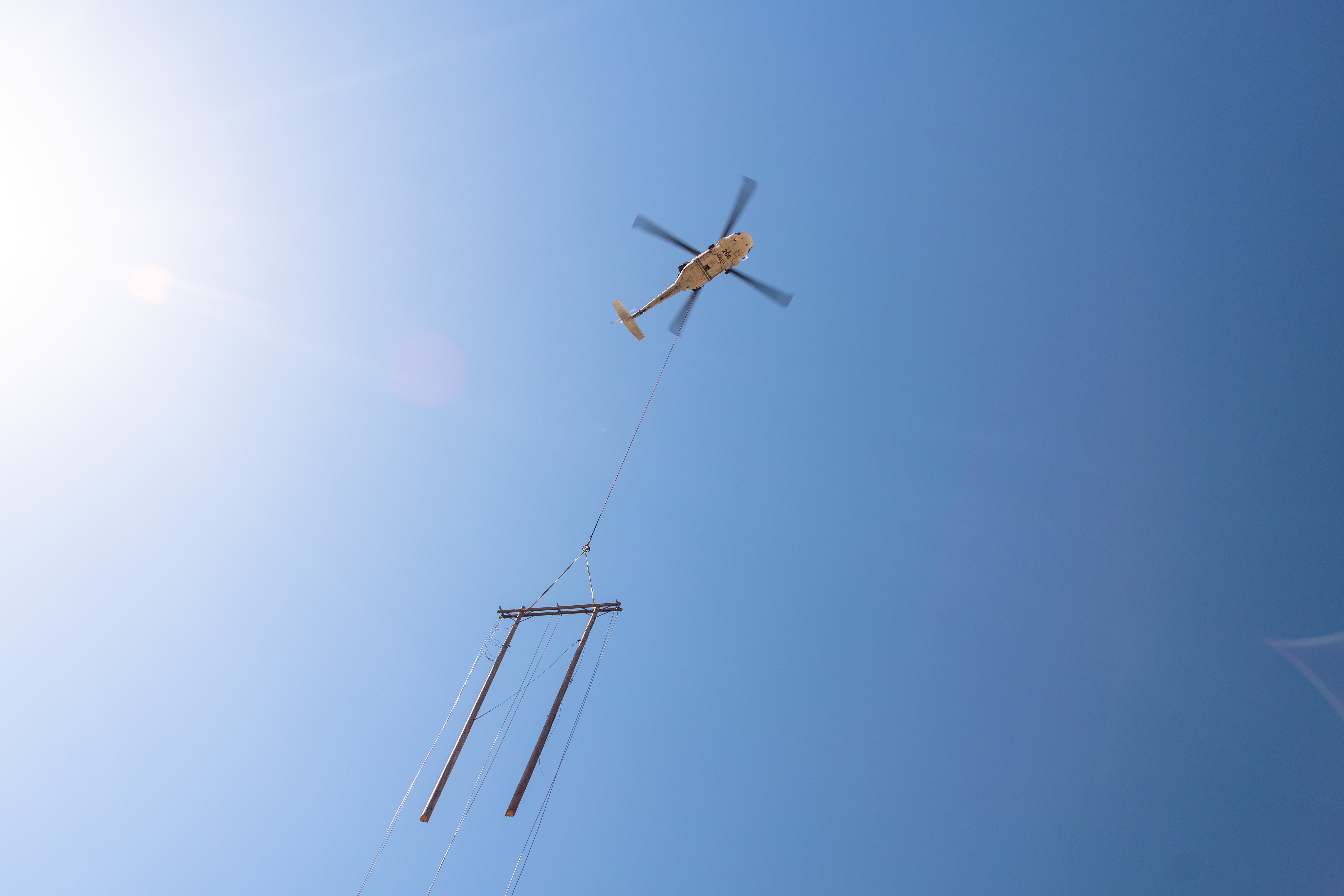
An H-frame pole is flown to the mountainside in Sequoia National Park so SCE crews can use it to replace the older, original piece of equipment.
Each week, a different training crew and two Tulare district crews partner with SCE’s Air Operations department to complete a portion of the work.
“While the helicopter portion is a unique part of the job, the more important learning is going on up on the mountain,” said Carranza. “We have high wire tensions back there, some weigh 2,200 pounds, so learning how to climb the poles and install the line safely is really valuable.”
Although the project was planned to run through the end of November, crews were able to finish ahead of schedule. With the combined effort of more than 115 SCE lineworkers, the final day of work wrapped up a month early.
“This place is irreplaceable,” said Carranza. “Every time we fly out here, we have the community in mind. This work will help prevent a natural disaster before it happens.”
For more information, visit sce.com/wildfiresafety.
Communications around wildfire safety are funded by ratepayers.