

Padding Poles for Safety Along Risky Roads


Padding Poles for Safety Along Risky Roads

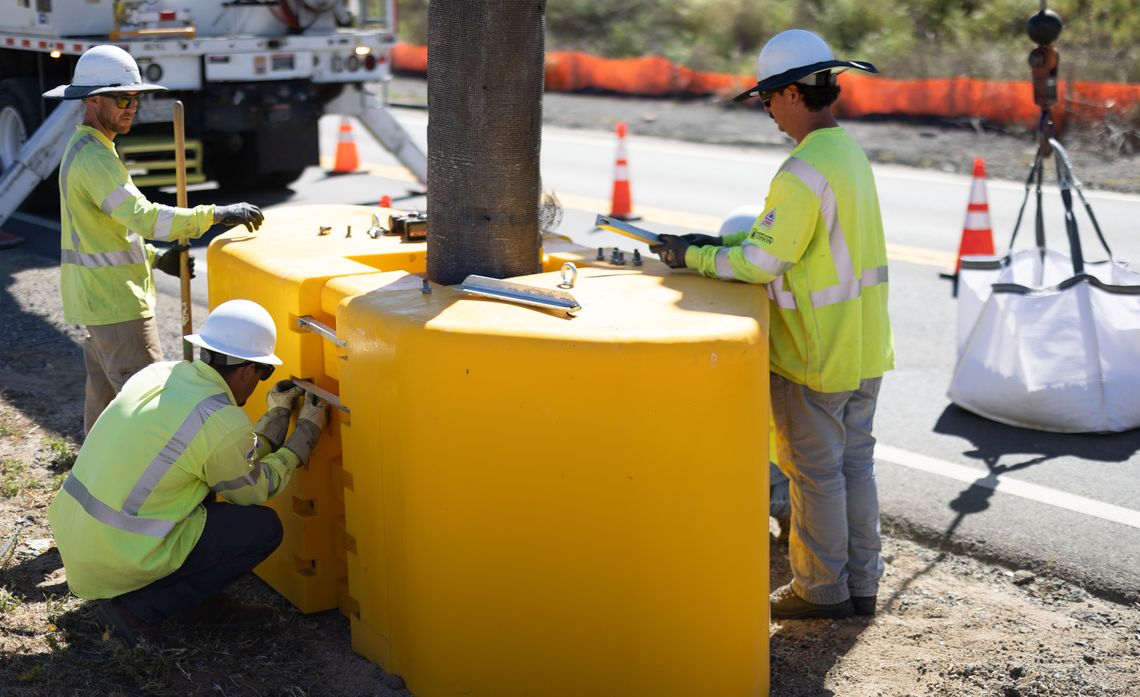
Bright yellow blocks are being added to the bases of certain utility poles along Southern California roads. These padded barriers, known as pole cushions, are designed to reduce the dangers of cars striking electric equipment.
“When a pole gets hit, it’s not just a repair issue,” said Ted Gribble, Southern California Edison’s principal manager of Wildfire and Public Safety. “It’s a safety issue first — for the people in the car, the first responders and the customers who may lose power as a result.”
SCE pads frequently hit power poles with cushions to help protect drivers and maintain reliable power for nearby neighborhoods.
Pole cushions absorb and spread out the force of impact — an effect that could improve survival outcomes for the car’s occupants. It can also increase the likelihood of a pole staying upright after a crash, lessening the chance of downed power lines or power outages in nearby communities.
Earlier this year, SCE installed six pole cushions in the Inland Empire’s San Timoteo Canyon, a stretch of road notorious for repeated pole collisions.
“Vehicle‑hit poles are one of the most persistent safety challenges we encounter,” said Nicole Kraus, an SCE senior advisor in Wildfire and Public Safety. “They make up about 80% of our public safety incidents, with more than 3,000 poles struck each year.”
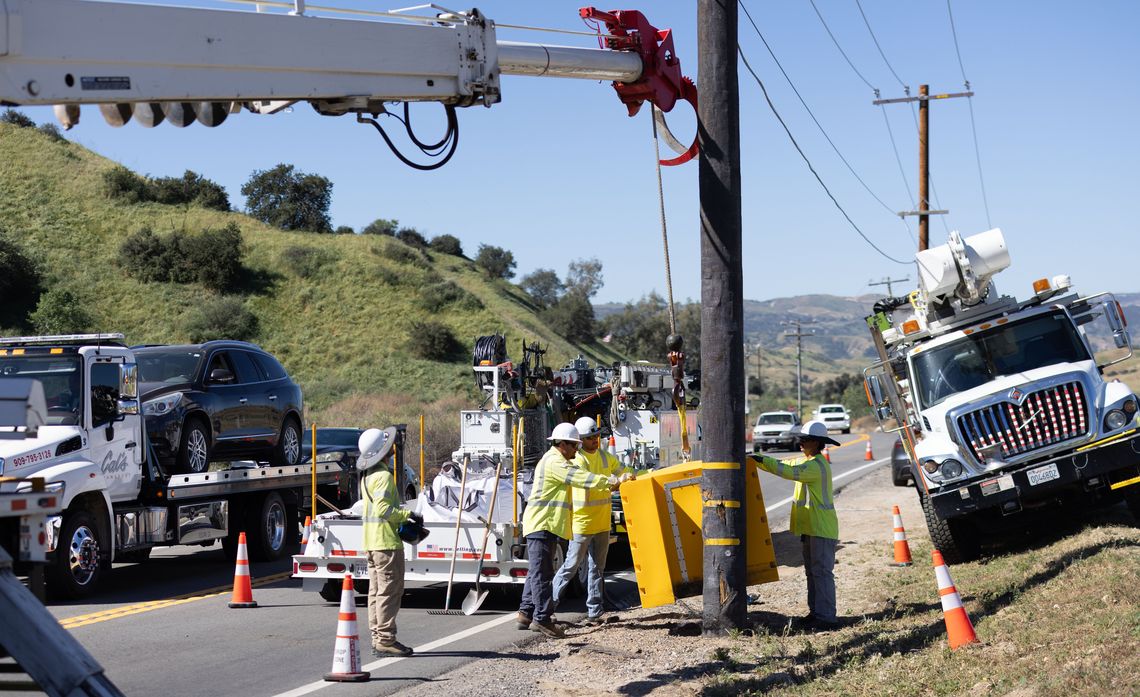
Although poles get hit across the system, some are struck far more than others. To better identify these hotspots, SCE created a custom modeling tool that tracks where poles are hit, how often, and under what conditions.
“We found that the highest-risk poles tend to line roads with higher speed limits, roads that have intermittent, sharper curves along otherwise straight segments and stand close to the street’s edge,” said Allison Bell, an SCE senior specialist in Predictive Analytics and Data Science. “This year we’re installing cushions on poles that were struck three or more times within ten years.”
In many of these locations, moving a pole or undergrounding power lines isn’t something that can happen right away.
“It can take years to move poles due to permitting, right-of-way limitations, nearby railroads or environmental reviews,” Kraus said. “These pole cushions give us a practical interim solution to reduce risk while we evaluate longer‑term options.”
In the meantime, local first responders are welcoming the added protection.
“We’ve responded to countless incidents in the San Timoteo Canyon,” said Vince Anderson, fire marshal for the Redlands Fire Department. “The aftermath can be devastating, so we’re really looking forward to what this project can do to improve public safety.”
Those improvements are already being realized. In June, one of the pole cushions was struck by a motorist. The result: no broken pole, no outage and no known injuries. SCE crews flipped the cushion around, readying it to absorb another collision.
As SCE installs more pole cushions, the same data driven approach will guide where they go next.
“Pole cushions don’t necessarily prevent accidents,” Kraus said. “But by reducing impacts where risk is highest, we’re working to make roads safer and power more reliable.”
For more information, visit sce.com/safety.
Communications around safety are funded by ratepayers.