

Engineering Solutions in a Landslide Zone


Engineering Solutions in a Landslide Zone

In the coastal hills of the Palos Verdes Peninsula, streets are crumpled and homes fractured as vast swaths of land slip toward the Pacific. Once slow-creeping, the Portuguese Bend Landslide Complex accelerated in 2024 and surged again in March — at times shifting as much as several inches per week across hundreds of acres — forcing residents and utilities alike to adapt in real time.
“The land’s movement caused power poles to lean and lines to snap, triggering power outages, while also posing safety risks for residents living in this high fire risk area,” said Jeremy Califano, a Southern California Edison senior manager of Major Construction Project Management. “At the pace the land is moving, we can’t safely replace the equipment fast enough to keep up with the land movement.”
SCE adapts parts of its power system to shifting land through a new Tension Relief Strategy designed to improve safety and reliability.
Instead of fighting the land, SCE created a solution that moves with it. A system known as Tension Relief Strategy uses special devices that expand, relieving tension on the wires as the land shifts — technology that took several months to engineer. Like adding slack to a rope so it doesn’t snap under pressure, tension relief devices loosen the strain on wires when poles drift apart so that equipment stays safely intact even as the earth moves.
“This approach helps us keep electricity flowing reliably and reduces fire risk from downed wires, even in neighborhoods that are still shifting,” said Roger Phillips, an SCE senior project manager of Major Construction Project Management.
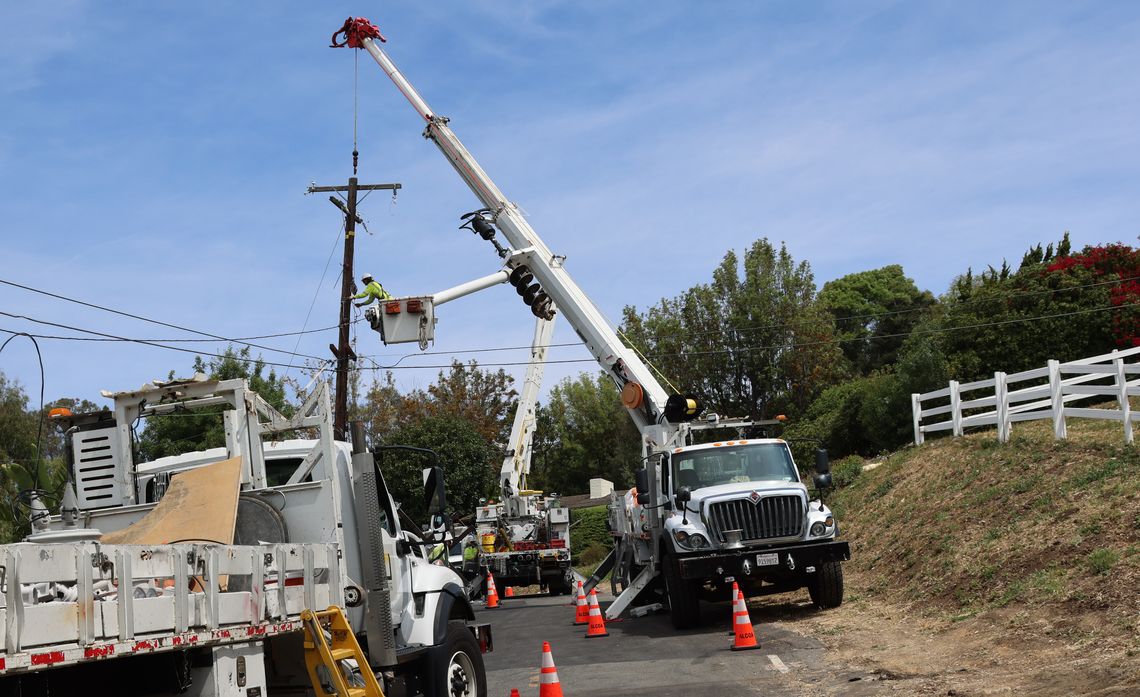
The Tension Relief Strategy comes together as crews mount devices designed to move with the land, not fight it.
Since October 2025, SCE crews have been working hard to implement the Tension Relief Strategy in the peninsula.
The system involves several moving parts that, once installed, work together to flux with changing terrain.
How Tension Relief Strategy works:
- DAC Omega tension relief device: Installed near the top of the distribution pole on the primary line, this device acts as a tension shock absorber, stretching up to 15 inches when the ground shifts so that wires don’t snap. The device was originally used in places like the French Alps to keep lines from breaking under heavy snow loads.
- Secondary tension relief springs: Mounted on the secondary lines lower on the pole, these springs allow movement in both directions, allowing extra flexibility as the land shifts.
- Service breakaways: Attached where service lines connect to homes, these breakaway fittings automatically disconnect if a house or pole moves too far, cutting power safely so electricity isn’t coursing through fallen wires.
- Covered conductor: These insulated wires replace bare ones along the spans, preventing sparks if a line falls in a high fire risk area.
- Taller poles: Strategically placed where extra slack is needed, taller poles help maintain clearance and stability as the land shifts.
“Instead of shutting power off every time the land moves, these devices give us time,” said Taylor Garcia, a SCE production specialist in the South Bay overseeing the technology’s implementation. “They prevent wires from snapping so we can plan repairs. That lowers both the frequency and duration of emergency outages our customers may experience.”
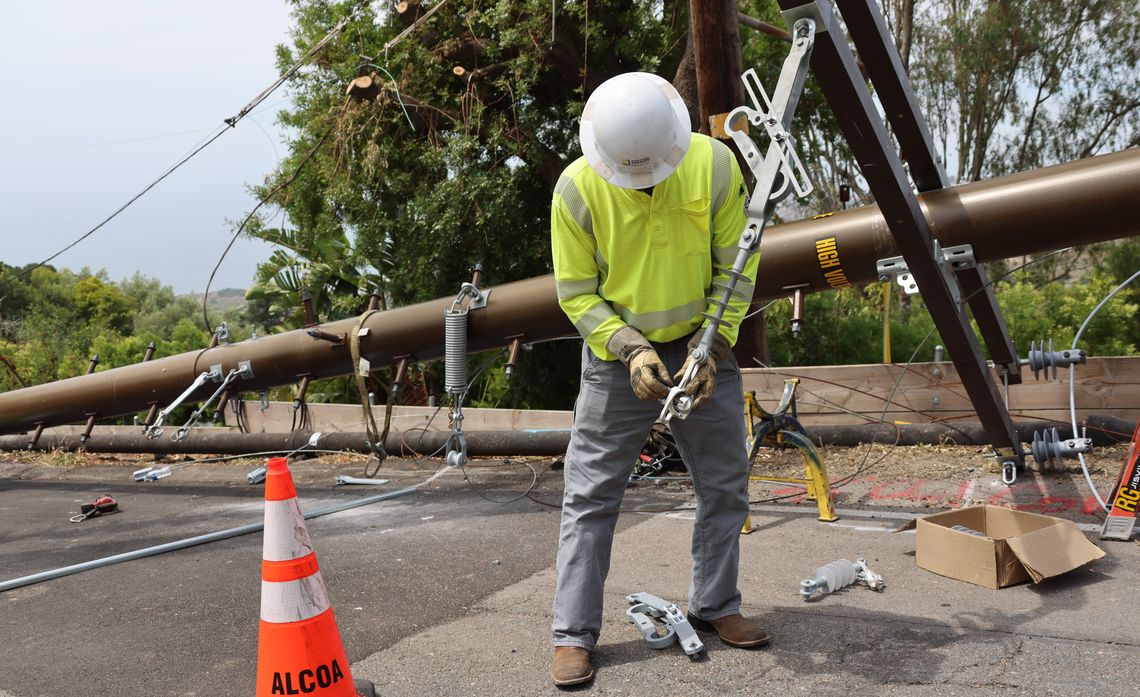
Using the DAC Omega device, SCE is allowing power lines to stretch safely as the land beneath the Palos Verdes Peninsula continues to shift.
Once fully installed, the system will help prevent downed wires and outages, even during heavy rains or renewed land movement. The proactive approach could serve as a model for other areas facing extreme environmental challenges. For customers, it means fewer outages and safer equipment.
“We know these outages have been frustrating, and we’ve worked hard to find a solution that safely delivers electricity,” said Garcia. “Residents have been amazing with letting us into their yards and dealing with work zones. We really appreciate the community’s patience as we make these changes.”
Communications for this program are funded by ratepayers.