


High in the Sierra Nevada, snowmelt trickles downhill, slipping into streams and pooling in reservoirs like Huntington Lake. Bound by a series of dams, this water helps Southern California Edison generate clean energy while supplying a resource relied on by surrounding communities, recreation areas and wildlife.
“So many aspects of society and the natural world depend on this supply of water,” said Mike Estep, an SCE construction advisor currently overseeing major upgrades to Huntington Lake Dam, also known as Dam 1. “You can imagine how important it is that these dams remain in good shape.”
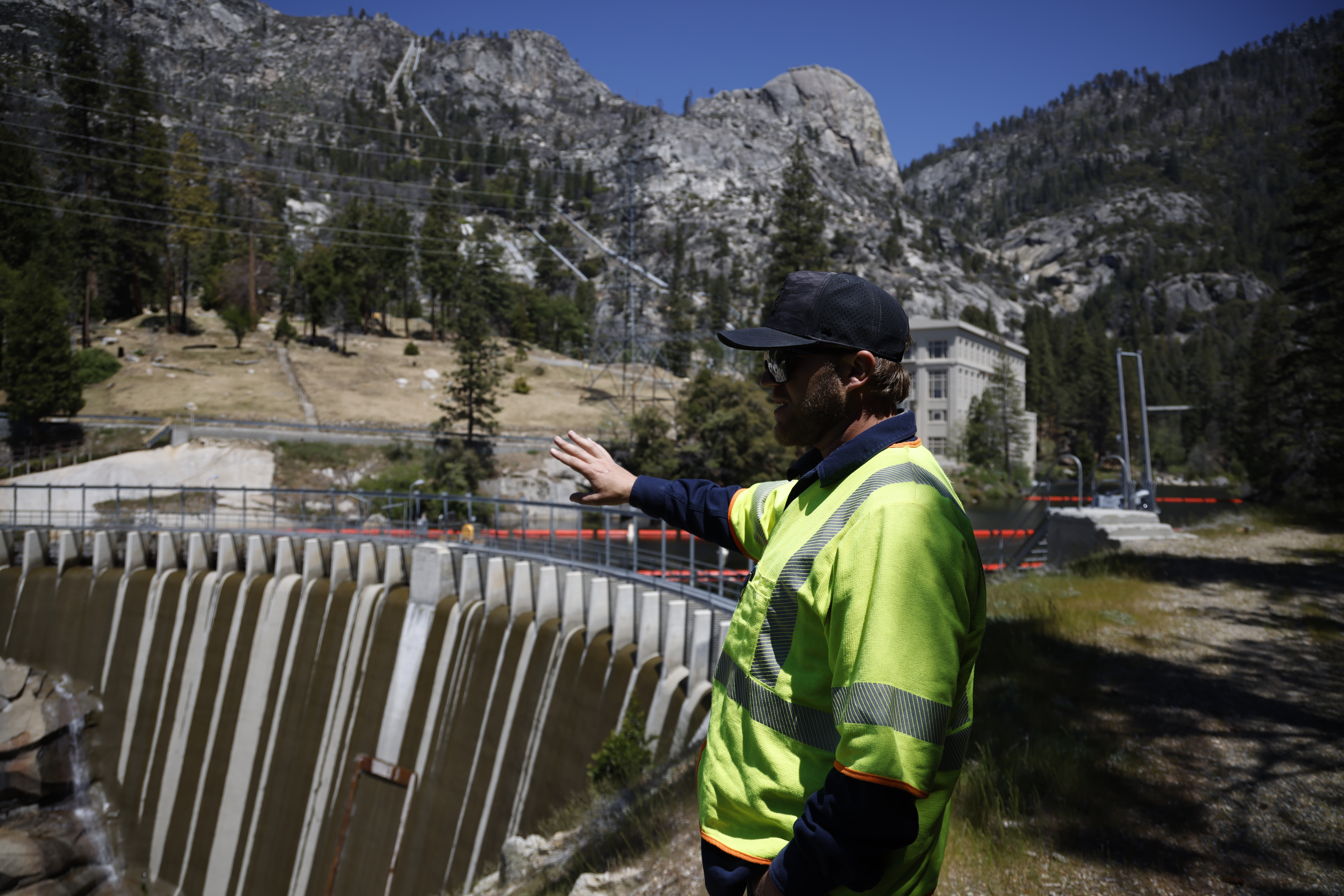
SCE Construction Advisor Mike Estep oversees upgrades on a network of dams connected to Huntington Lake.
For Estep, the network of dams, powerhouses and lakes that make up SCE’s Big Creek Hydroelectric Project represents more than power equipment — it’s a vivid part of his childhood memories, shaped by summers spent boating and enjoying water sports.
“This area has always been part of my life,” Estep said. “I’ve spent a lot of time on the water, and I know how many people care about this place.”
Now, he is helping protect the area by coordinating upgrades to the Dam 1 core systems, while minimizing impacts to the lake and its surroundings.
Some maintenance and repairs can be done above water, but others lie at the bottom of the dam. Draining Huntington Lake to reach low-lying equipment like pipes and valves would shut down recreation, disrupt nearby communities and potentially harm fish and wildlife. So instead, SCE is completing the work while the lake remains full. That means specially-trained divers are performing underwater repairs while a crane mounted on a floating barge dredges sediment from the bottom of the lake.
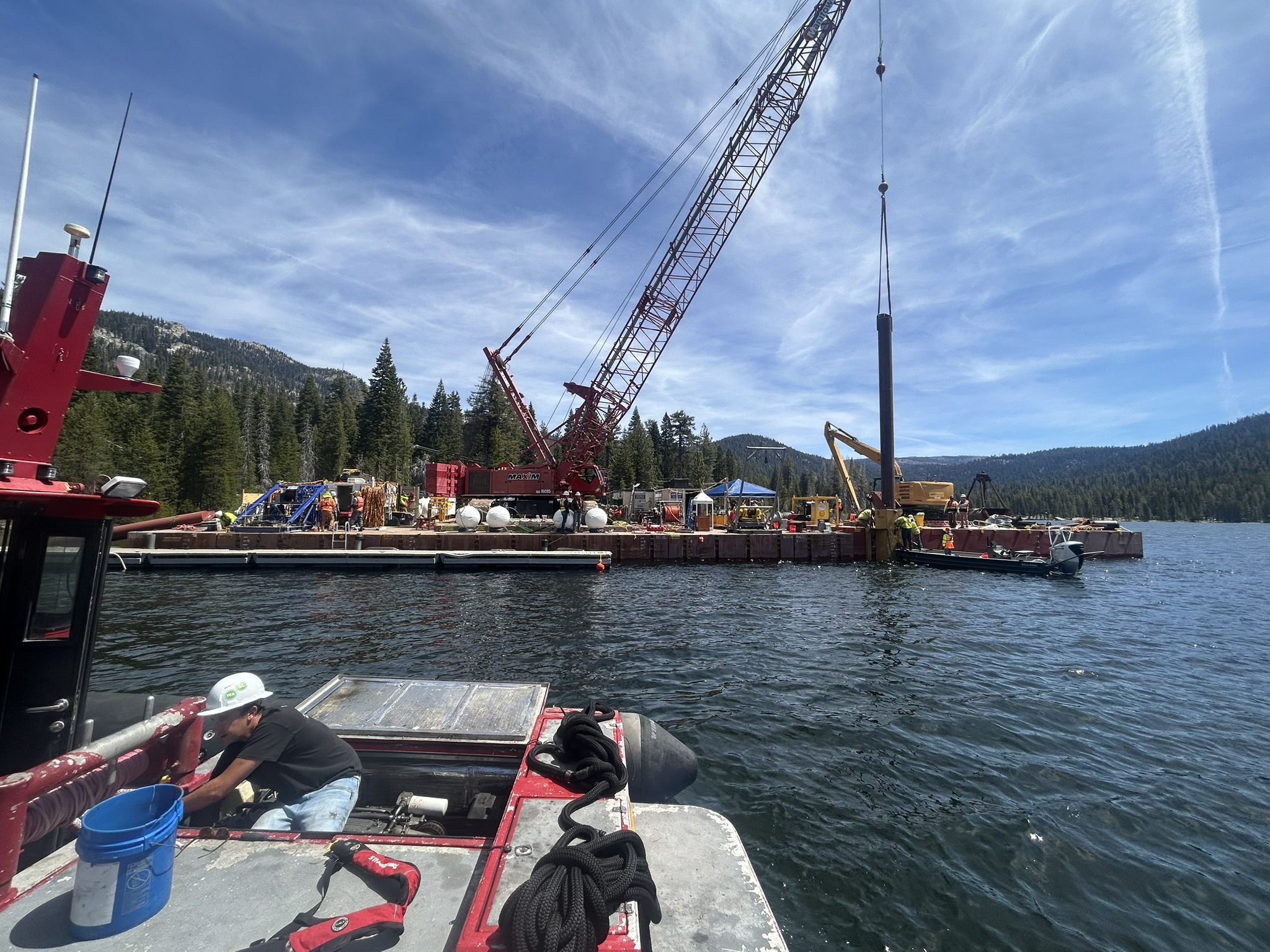
A crane mounted on a floating barge dredges sediment from the bottom of the lake while specially-trained divers perform underwater repairs.
“It’s more complicated, but it’s worth it,” Estep said. “We’re keeping the lake usable while still making sure the dam remains safe.”
Crews recently completed upgrades to the Dam 1 water conduits — three large pipelines that carry water through the structure and date back to the early 1900s. To reline the original pipes, which were reaching their end of life, crews reinforced them from the inside, preserving the dam’s historic footprint.
“We’re working on structures that were built over a century ago,” Estep said. “We have to figure out how to keep it safe without losing what makes it unique.”
SCE is now upgrading the Dam 1 low-level outlet valves, which allow operators to release water in a controlled way. These valves help reduce pressure on the dam during emergencies like earthquakes — similar to opening a bathtub drain to safely lower water levels.
“These upgrades give us more control and flexibility in managing the water supply,” said Nicolas von Gersdorff, SCE senior manager of Engineering and Construction. “That control is a big part of protecting the public.”
Long days of planning and construction trace back to one purpose for the team working on the project.
“There are people living downstream, kids learning to sail on the lake and wildlife depending on this water,” Estep said. “Making sure this dam stays safe is about protecting all of that.”
If you plan to enjoy the outdoors in the vicinity of a dam, follow these tips to keep yourself and loved ones safe:
- Never swim near a dam or dive from a dam structure. Dangerous currents can pull you through the dam or against flow structures.
- Never fish, boat or swim immediately below a dam where water levels and flows change quickly.
- Pay attention to signs identifying areas prohibited from public access, and in some places, early-warning sirens that alert the public to move to high ground.
- Check water levels before jumping into lakes and rivers.
- Watch for signs of rising, swift and cold water.
Click here for more information about National Dam Safety Awareness Day, May 31.


