

Children’s Plays Pack Safety Lessons


Children’s Plays Pack Safety Lessons

You might call it one of the sneakiest lessons of the school day. Within an hour of watching a play, a hundred students no older than 8 years old chanted — “I’m a fan of making a plan!” — for emergency preparedness.
“It’s the storytelling that gathers their attention,” said Adriana Osorio, a first grade teacher at Inghram Elementary School in San Bernardino. “They think it’s just this fun little story and by the end, they don’t even realize they actually learned something.”
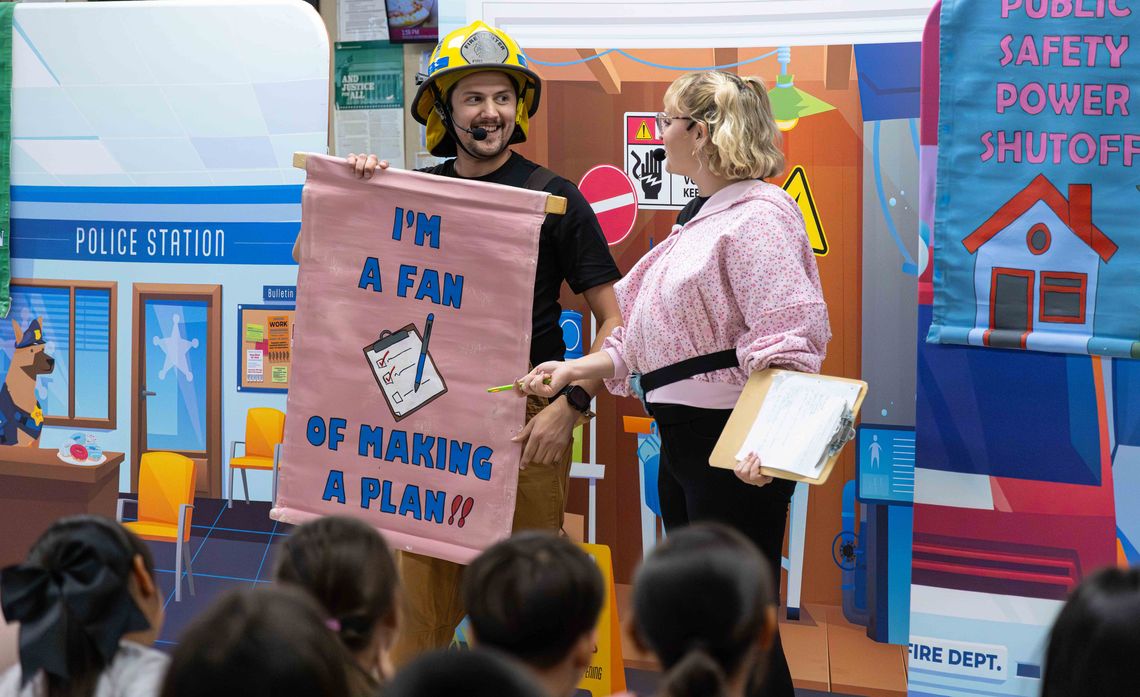
By recess, Osorio’s students weren’t just reminiscing about funny characters; they were talking about emergency kits and what their families should do in case of natural disasters like wildfires.
That kind of carryover is exactly what Edison International Foundation’s long-running support of The National Theatre for Children (NTC) is meant to encourage. This is the 15th year that NTC has brought Edison-funded safety plays to elementary schools and clubs across Southern California Edison’s service area. The support goes beyond the performance itself, funding bilingual activity books, lesson plans, games and quizzes that help teachers keep the conversations going after the actors pack up and leave.
“Helping children learn safety lessons in a way that feels fun, memorable and easy to share at home is exactly the kind of community impact we want to support,” said Aja Clarke, Edison International director of Corporate Relations and Philanthropy.
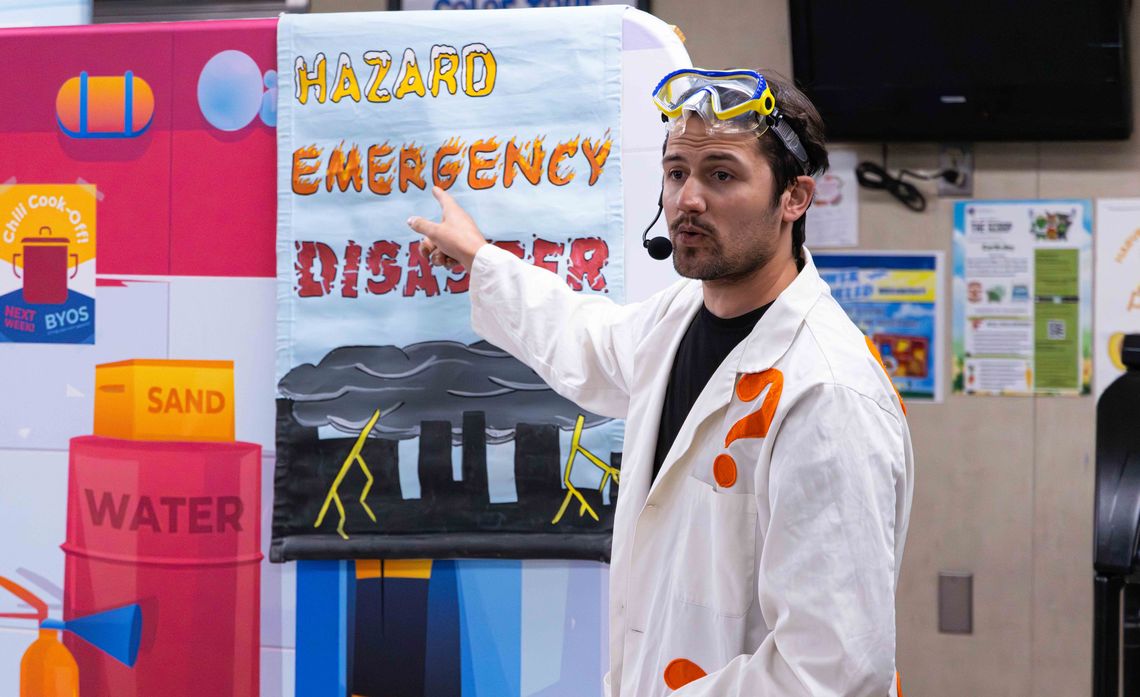
Actor TJ Corsaro helps students break down the difference between a hazard, an emergency and a disaster during The National Theatre for Children’s Edison-sponsored play on emergency preparedness.
This spring, NTC actors Elise Marie Lindenau and TJ Corsaro performed nearly 40 shows for hundreds of students across Los Angeles, Riverside, San Bernardino, Orange, Ventura, Kings and Tulare counties. The duo brings safety lessons to life by bouncing between characters and leaving room for improvisation, all while keeping the facts front and center.
In the play “Ready or Not: Preparing for Wildfires,” witty banter between characters like Penelope Planner and the chaos-causing Calamity Dwayne teaches students the difference between a hazard, an emergency and a disaster, how wildfires can start and why first responders are there to help. The play also introduces Public Safety Power Shutoffs where power may be temporarily turned off in certain areas during dangerous weather conditions to help reduce wildfire risk.
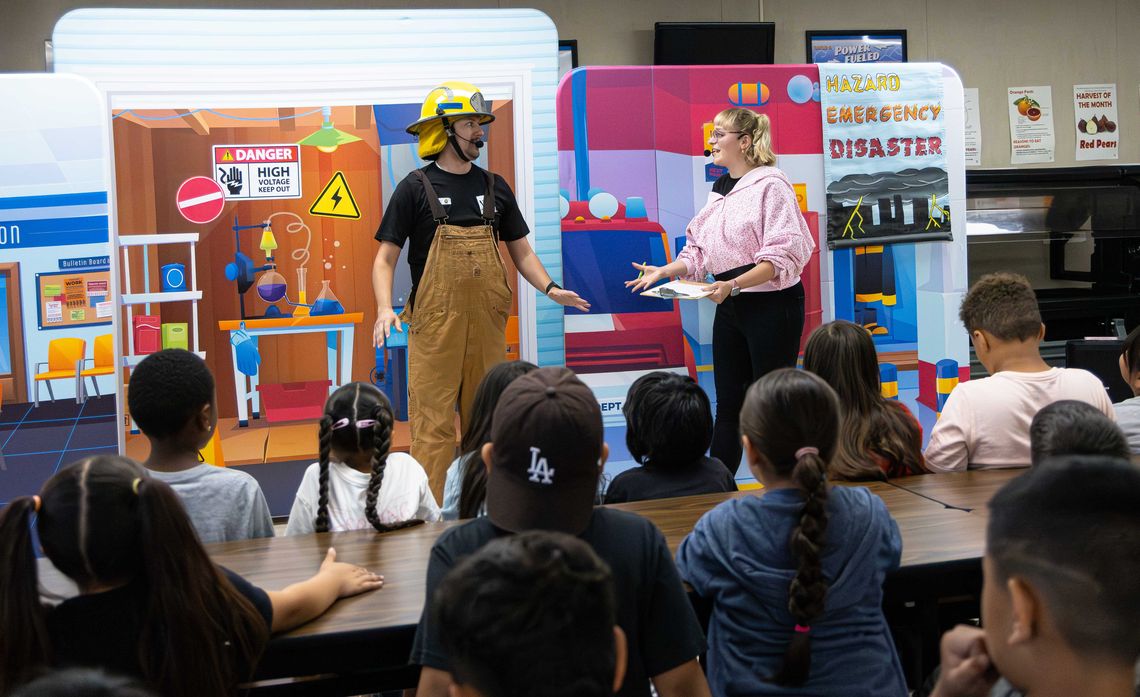
“Through theatre we can kind of covertly teach kids about these important but sometimes complicated topics without them even picking up on it,” said Corsaro.
“Mixing humor with live audience participation can help abstract concepts feel so much more interactive and approachable,” added Lindenau.
While the costumes and characters may have disappeared by the end of the show, the lesson did not. It followed students back to class — and perhaps even all the way home.
For more information on emergency preparedness, visit sce.com/beprepared.
The state requires educational public communications regarding emergency preparedness, which are funded by ratepayers.