


An old CD, a couple bottle caps and a popsicle stick don’t look like much on their own. But in the hands of high school students, they became a blueprint for an eco-friendly home model — and a glimpse of what a clean energy future could look like.
“Building something with my hands made everything we’ve learned feel more real,” said Phoebe Morris, a senior at Huntington Beach High School who will study applied math at the University of California, Berkeley in the fall.
Morris was one of 25 students from her engineering class to visit Southern California Edison’s Grid Technology Development Labs in Westminster. The visit, organized through a partnership with Orange County United Way’s United for Student Success program, combined a career panel, a site tour and a hands-on building challenge that put sustainability concepts into action.
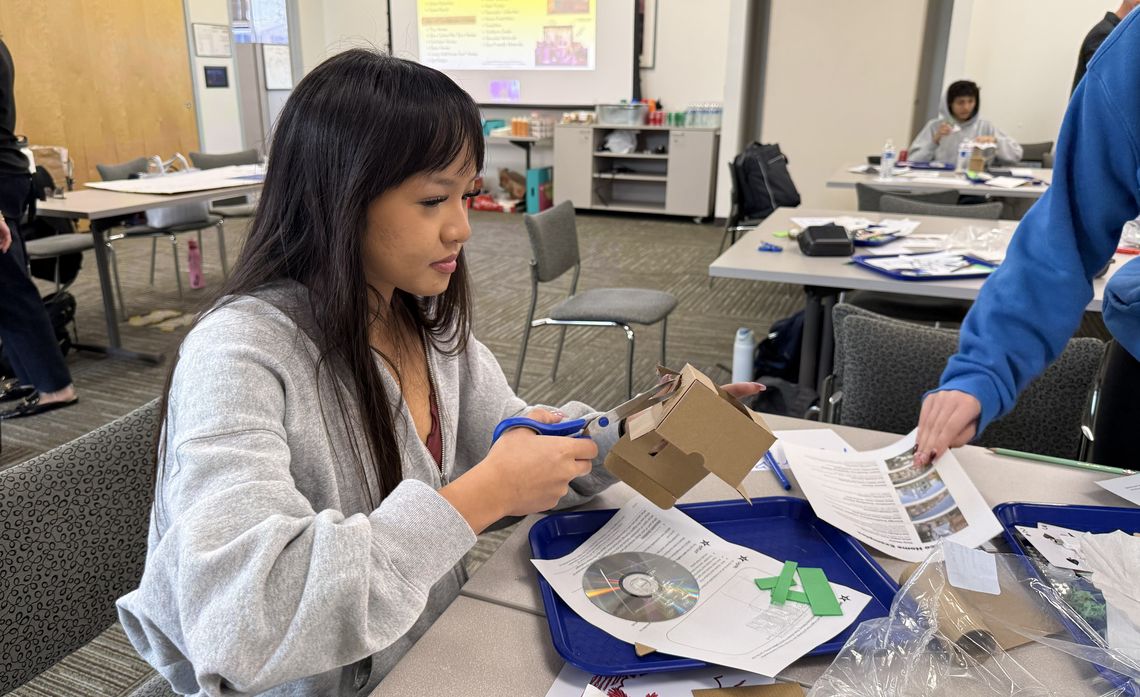
Phoebe Morris, a student at Huntington Beach High School, works to build a miniature eco home with recycled material.
During the activity, students built miniature eco homes using STEAM (Science, Technology, Engineering, Arts and Mathematics) challenge kits designed by Child Creativity Lab, a nonprofit that creates practical learning experiences using recycled and repurposed materials. Each kit included the same set of everyday items, but with no instructions and no single “right” answer.
“We’re not trying to teach students how to follow instructions,” said Tracey Hill, CEO of Child Creativity Lab. “We’re teaching them how to think differently, solve problems their own way and see potential where others might see waste.”
With nearly $100,000 in funding from Edison International over the past 10 years, Child Creativity Lab has reached tens of thousands of students across SoCal. Last year alone, the organization diverted more than 14,000 pounds of materials from landfills and reached more than 40,000 students, many from underserved communities.
The eco home kits themselves were developed through collaboration between Child Creativity Lab and SCE, incorporating concepts tied to sustainability and future housing. Ahead of the visit, SCE employees volunteered their time to assemble the kits, giving staff a chance to support the experience — from preparation to student impact.
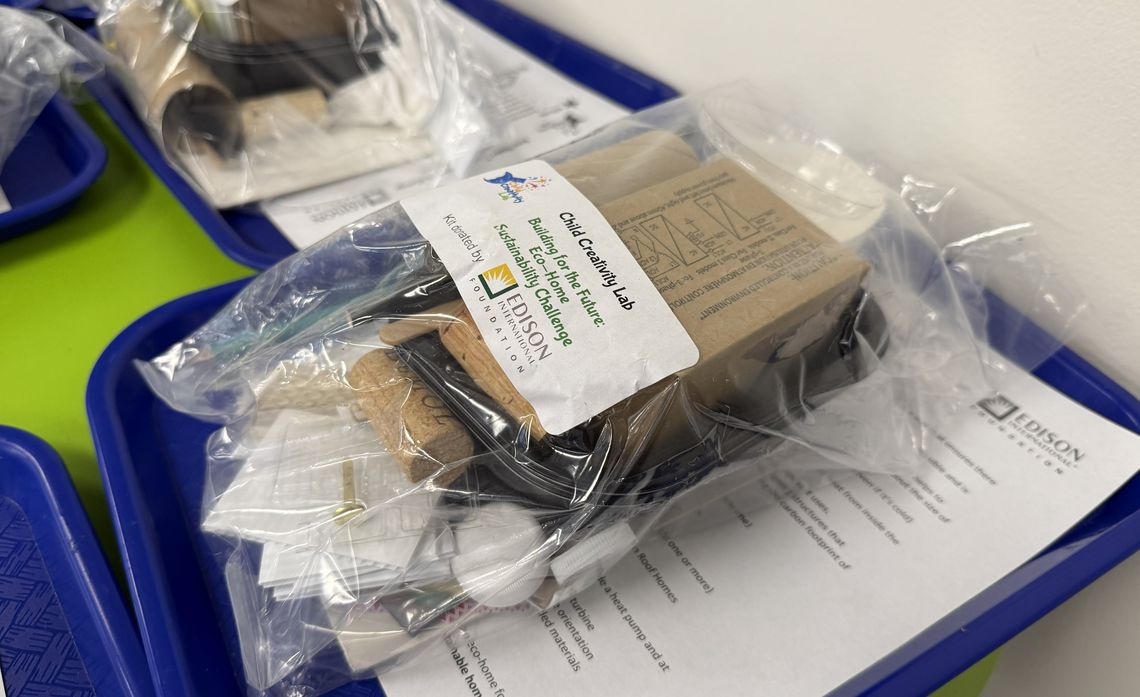
Recycled materials provided through Child Creativity Lab’s STEAM kits give students a new way to approach learning and design.
“It’s exciting to see students interested in engineering and science take part with their own hands, and then see how it comes to life,” said Cody Tubbs, director of SCE Public Affairs and chair of Orange County United Way’s United for Student Success program.
As students started building, creativity quickly took over. All eco homes featured an electric heat pump, with some prioritizing airflow and structure, and others focusing on unique designs or imaginative features.
For Huntington Beach High School engineering teacher Kevin Crossett, that kind of hands-on creativity is exactly what today’s students need.
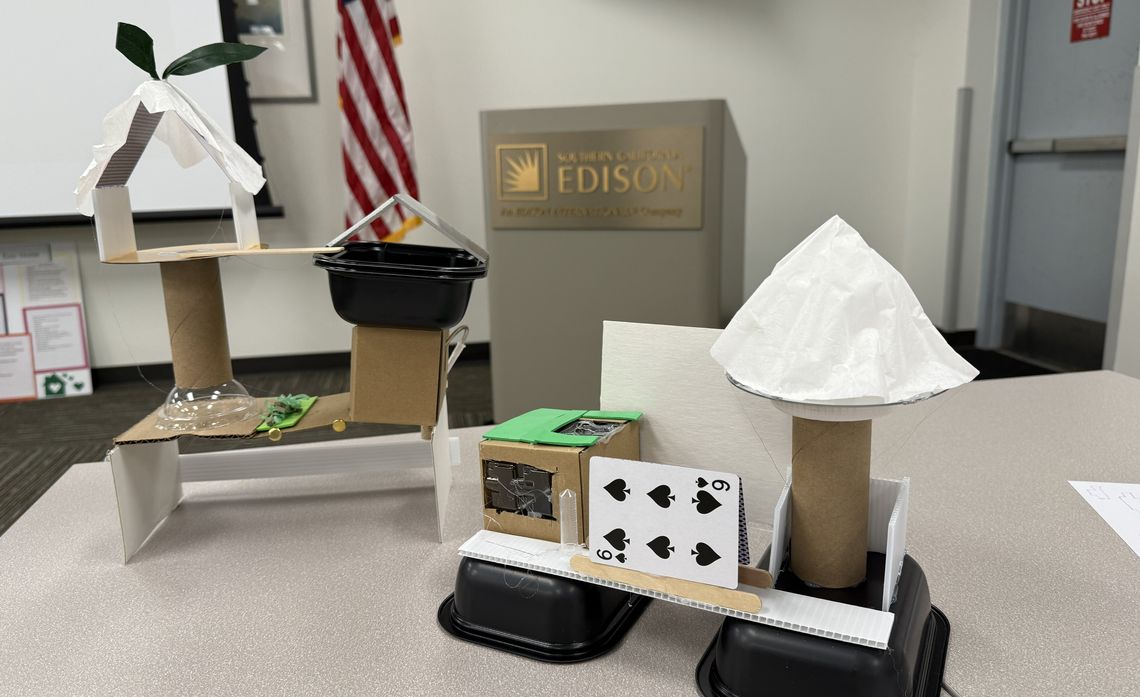
Once finished, students will have turned recycled material into an eco home prototype.
“This generation of students is incredibly tech‑savvy, but it’s just as important for them to build with their hands,” Crossett said. “When I was growing up, it was almost the opposite — we were good with tools but had to learn computers later. Experiences like this help bring those skills back into balance.”
As the room filled with half‑built homes and creative debate, one thing was clear: Sometimes, all it takes to build big ideas is a small pile of recycled scraps — and the freedom to imagine what they can become.
“Today made me even more excited about exploring the engineering process in general and hopefully one day using it for community-centered solutions,” said Morris.
For more information on Edison International’s commitment to giving back, visit edison.com/community.


