


For years, every drive Doug Brown took came with a calculation — not just how far he was going, but whether the price tag would be worth it.
A 30-mile commute, a trip across town, even a quick drive to the coast for a surf session before work — each one came with a mental trade-off, shaped by gas prices that seemed to rise without warning.
“Gas prices just kept going up,” said Brown, a long time SoCal resident. “It was becoming harder and harder to do things.”
At the time, Brown drove a turbocharged, gas-powered car that required premium fuel and frequent maintenance. Between fill-ups and upkeep, he was spending around $300 a month, sometimes more.
“It took away some of the freedom,” he said. “You start thinking — do I want to spend this on gas, or do I want to spend it on something else?”
Those trade-offs added up. So, when it came time to replace his car, Brown did what he always does: he built a spreadsheet. “We mapped everything out,” he said. “Car payments, gas, what we’d save if we opted for electric.”
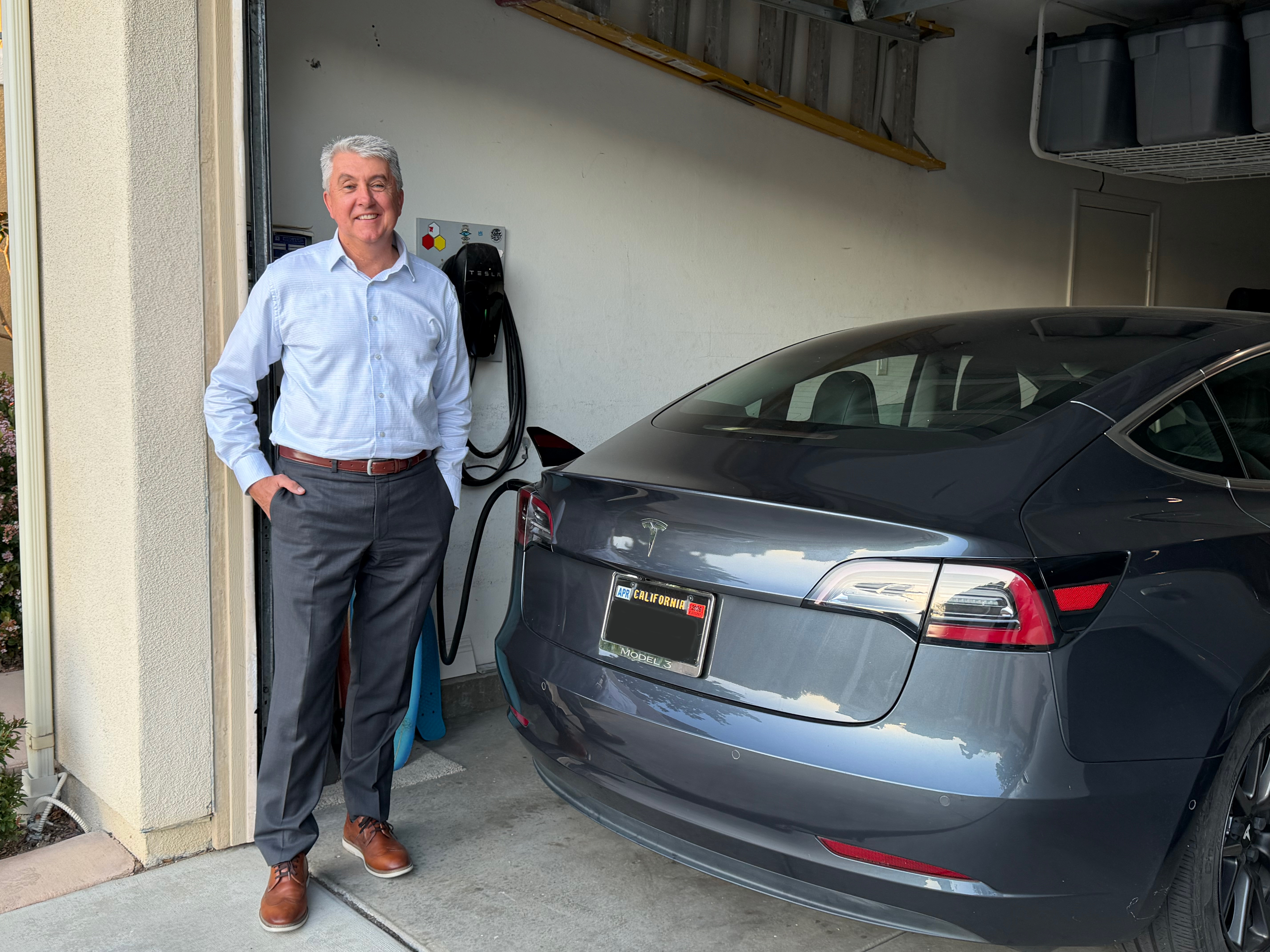
Doug Brown used one of SCE's Time-of-Use Rate plans to help make the switch from a gas guzzler to a more wallet-friendly electric vehicle.
The numbers told a different story than he expected — going green would actually save him some green.
Rebate incentives helped reduce the upfront cost of an electric vehicle, and Southern California Edison’s Time-of-Use Rate plan helped lower his monthly expenses, ultimately sealing the deal.
“Some people think EVs are only for people with a lot of money, and I disagree completely,” he said. “I think they’re more affordable than people think.”
Now, Brown charges his EV at home during off-peak hours — typically earlier in the day or overnight — which offers lower electricity rates for customers on a TOU plan. Most nights, his car charges automatically while he sleeps.
“Being on a TOU plan gives me consistency. Gas prices were always changing, but now I know what to expect every month, and that gives me peace of mind,” said Brown.
On average, he now spends about $115 per month to power his vehicle — less than half of what he once paid for gas. On the rare occasion when he uses a public charger, a full session costs about $20.
The combination of home charging and a TOU plan has removed the mental and financial burden that once came with every drive.
“Driving electric freed up our budget,” Brown said. “Now we can put that money back into our family.”
Ways to Save on EVs
If you’re an SCE residential customer and you buy or lease a qualifying pre-owned EV, rebates are available:
- $1,000 back on your purchase or lease
- Up to $4,000 back, if your household meets income-qualifying guidelines
Many people who switch to electric say the convenience of charging at home is one of the biggest benefits, but older homes sometimes need electrical upgrades to support a Level 2 EV charger. Charge Ready Home can help.
- Receive up to $4,200 in rebates to cover electrical panel upgrades for income-qualified customers.
For more information, visit sce.com/cleanenergy.


