

SCE Removes Transmission Towers for Examination


SCE Removes Transmission Towers for Examination

Since the start of the Eaton Fire investigation, Southern California Edison has been committed to transparency.
Investigators have been examining transmission towers and lines near the possible ignition point in Altadena. Now, the towers are being disassembled and moved to a site outside of the canyon where investigators can examine the equipment more closely.
“We're taking them down in cooperation with interested stakeholders,” said Marc Ferguson, SCE senior manager of Transmission Operations and Helicopter Assisted Line Organization (HALO). “We’ll break them down for testing to see if there were any electrical problems that indicate issues with the lines.”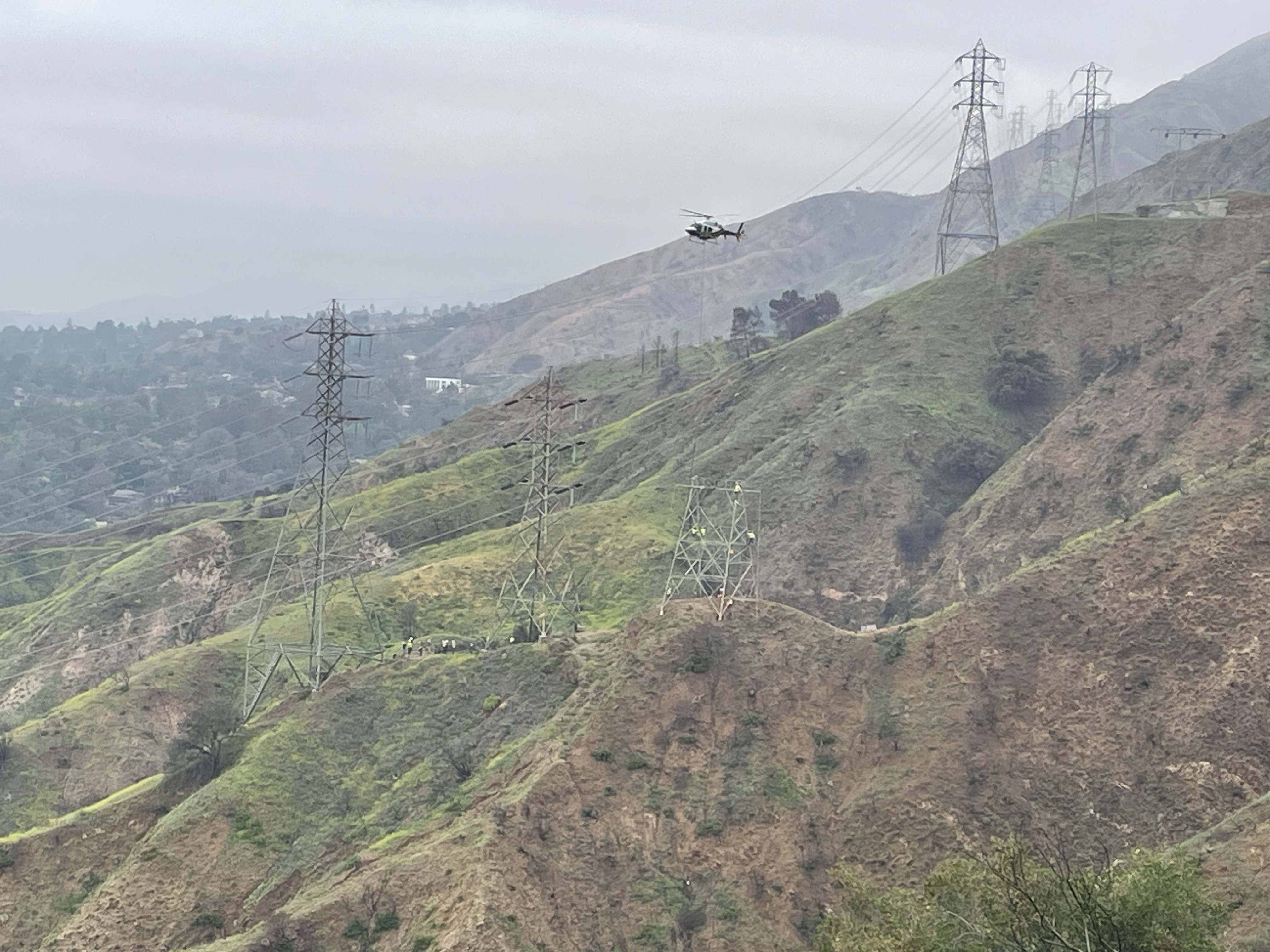
Ferguson’s team is responsible for projects that require a work method called human external cargo, where lineworkers hang from helicopters while performing their work. Because the corridor where the towers are located is difficult to access on foot, his team partnered with SCE Aircraft Operations to fly in crews, tools and material to complete the removal process.
Ten HALO field personnel, the Metro East Transmission crew and several helicopter linemen have been involved with the project — about 24-line hands total.
Aligning with SCE’s commitment to transparency, the lineworkers tasked with disassembling and removing the towers wear GoPro cameras, capturing each step of the process. Investigators and other stakeholders can access the footage and have been onsite throughout the process providing input.
First, crews spent several days detaching the lines between the two towers. Then, to move the towers, each needed to be broken into multiple parts.
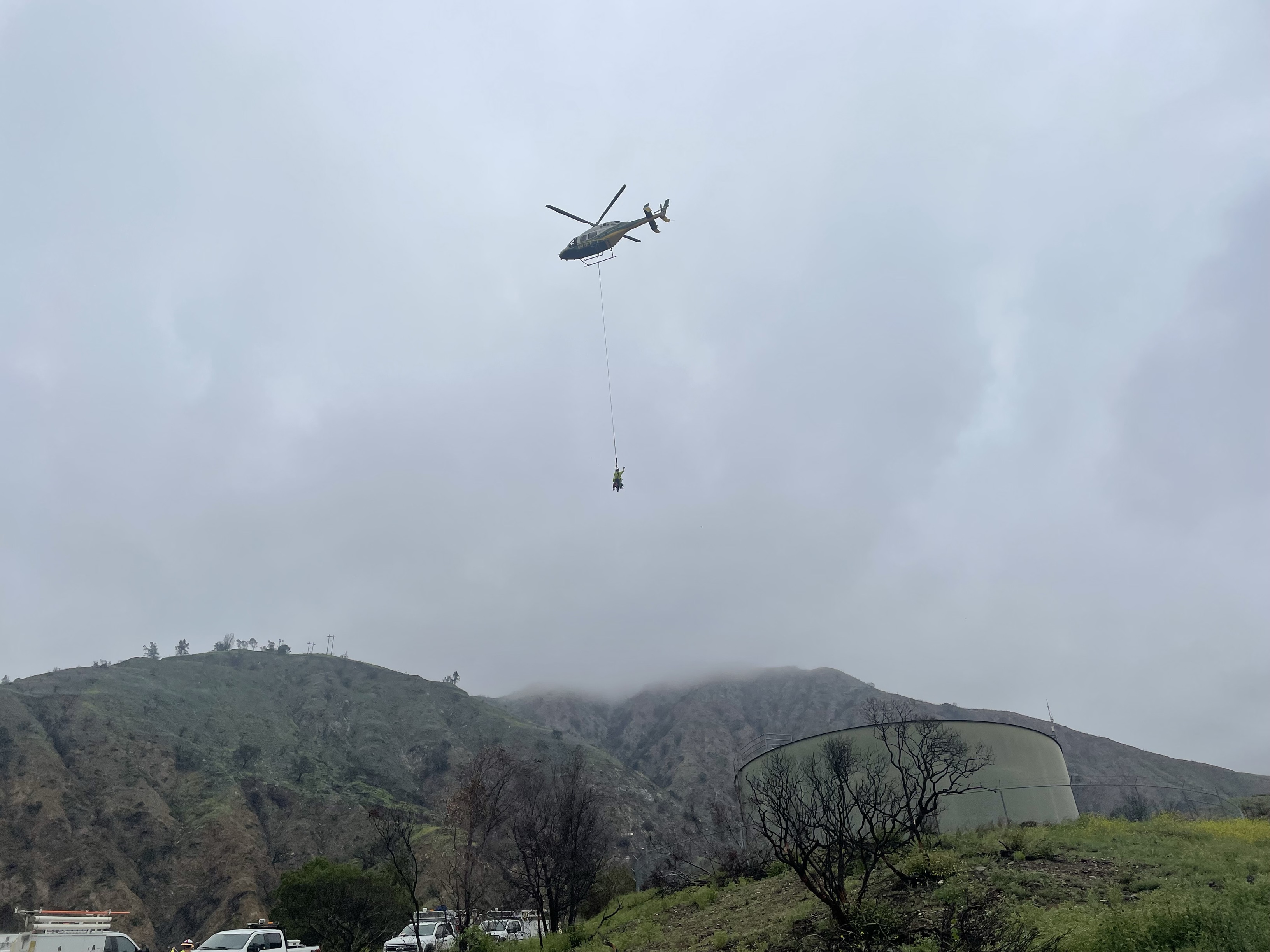
“The towers weigh approximately 17,000 pounds,” Ferguson said. “That’s why they are being taken out in two, possibly three, sections with a large helicopter called a Sky Crane.”
The structures are flown to a nearby landing zone for examination by a team of stakeholders before further disassembly.
“Both towers will be taken apart piece by piece, with every piece tagged, then loaded on trucks and taken to a facility for further testing,” Ferguson said. “The process takes two to three days to complete.”
The removal of the towers is another step in a thorough and transparent investigation. Prior to this, SCE partnered with an outside agency to complete weeks of electrical testing while the towers were in place within the canyon.
“We ran every test you can imagine before we attempted to move anything,” Ferguson said. “Everybody wants to know what happened, whether SCE equipment played a part or not, so we are doing our due diligence to get to the bottom of that. It’s very important to us and the community to get those answers.”
For more information, visit sce.com/disasterrecovery.