

Native Plants Keep Homes Resilient


Native Plants Keep Homes Resilient

In wildfire-prone areas, safety doesn’t stop at the walls of a home — it extends to the yard.
Alex Venz and his wife discovered that reality firsthand while reimagining the landscape around their Lancaster home, where extreme heat, wind and nearby open land make wildfire risk a constant consideration.
“We knew wildfire risk was something we had to think about living out here,” Venz said. “This was the first time we’d redone a yard ourselves and had to really think about how it functions, not just how it looks. We realized quickly just how much the landscape itself could be part of the solution.”
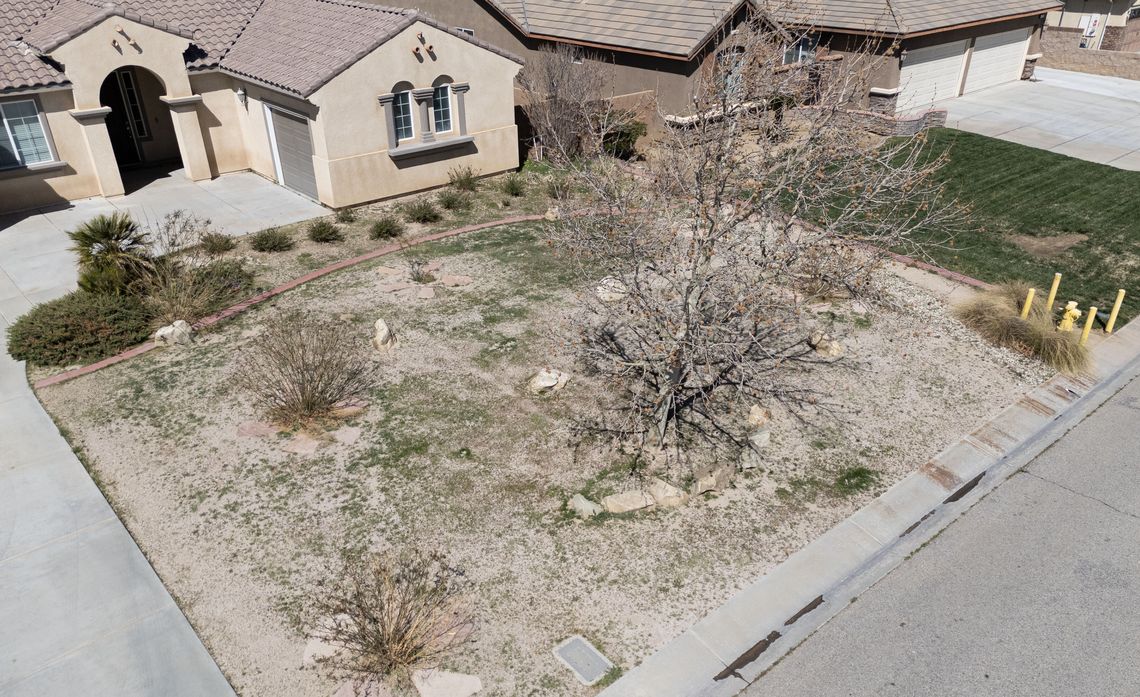
Before getting landscaped, Alex Venz’s yard lacked the structure and strategy needed to help reduce wildfire risk.
In the search for practical guidance, Venz found the Theodore Payne Foundation, a SoCal nonprofit focused on native plants. With funding from Edison International, including a $25,000 grant in 2025, the foundation offers classes and resources that help residents understand how thoughtful landscaping can support wildfire safety.
Through the foundation’s wildfire-focused classes, Venz learned how plant choice, spacing and ongoing maintenance influence the way fire moves through a landscape. He applied those lessons at home by designing wide pathways and planting zones that break up vegetation.
“People often assume plants automatically make a home more vulnerable,” said Erik Blank, a horticultural educator with the Theodore Payne Foundation. “But when done properly, landscaping can actually become part of a wildfire resilience strategy.”
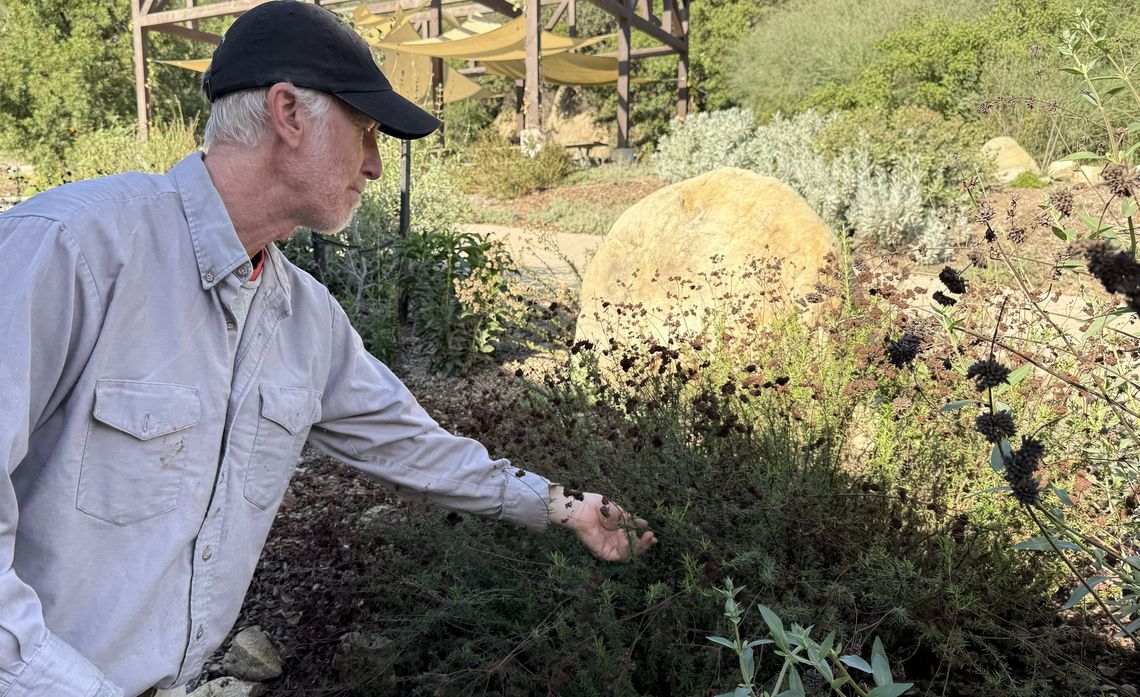
As a horticultural educator at the Theodore Payne Foundation, Erik Blank guides visitors through selecting and maintaining native plants that can help slow fire near homes.
Blank teaches residents how to look beyond whether a plant is simply drought-tolerant and instead focus on native plants. They’ve evolved alongside California’s climate, adapted to natural fire patterns and offer other perks. For example, the foundation might suggest common yarrow and beach strawberry as flowering groundcover instead of grass lawns, or hardy lemonade berry bushes that produce edible fruit, and sage to attract hummingbirds, butterflies and native bees.
“When native plants are healthy and maintained, they hold moisture differently and respond in ways that can reduce how quickly fire spreads near homes,” said Maryanne Pittman, the foundation’s director of Public Programs. “Those extra seconds count and can make all the difference in giving people time to evacuate or for firefighters to respond.”
Advancing that kind of practical education is why Edison International supports organizations like the Theodore Payne Foundation in helping communities access tools and knowledge about wildfire resiliency.
“People need guidance they can actually use,” said Aja Clarke, Edison International director of Corporate Relations & Philanthropy. “When homeowners understand how their yards can make a difference, it strengthens safety not just for one home, but for entire neighborhoods and communities.”
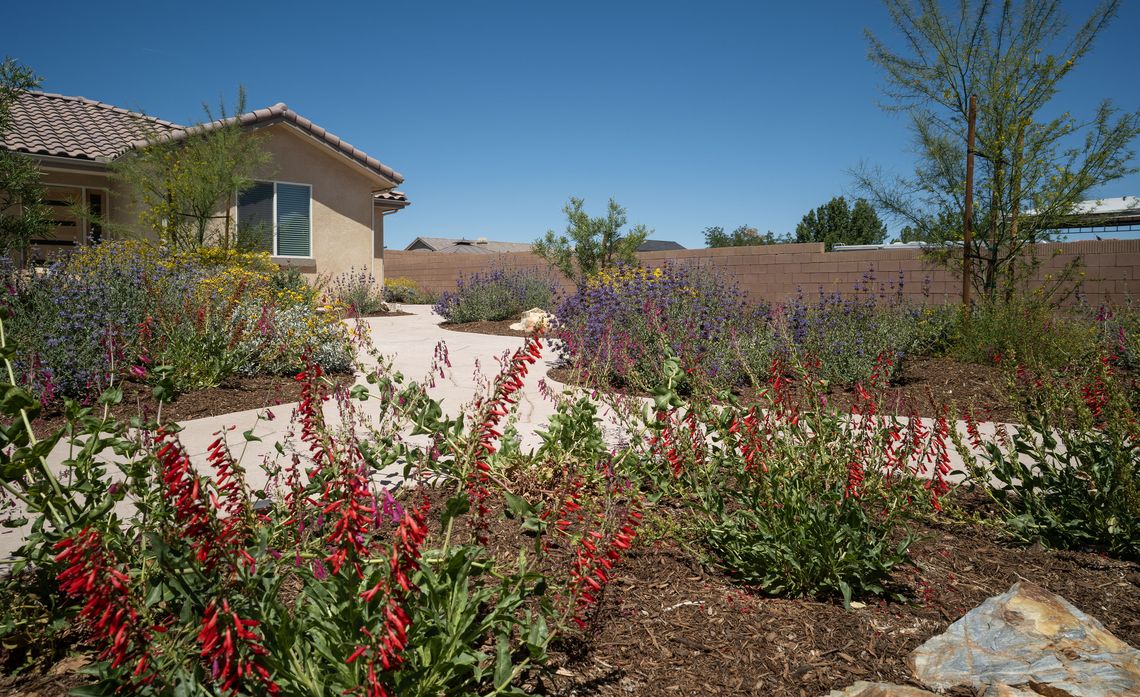
Native plants thrive in Alex Venz’s backyard, where design choices and maintenance help reduce fire risk while supporting the local ecosystem.
The lessons are visible to Venz every time he steps outside. What was once bare dirt has grown into a diverse native landscape designed to balance beauty, habitat and safety.
In spring, the payoff is especially clear.
“The whole place comes alive,” Venz said. “The yard smells like sage, everything is blooming and it feels like walking through a park. Knowing it’s designed to fit this environment — instead of working against it — gives us a lot of peace of mind.”
For more information on Edison International’s commitment to giving back, visit edison.com/community.