

How to Safely Trim Trees Near Power Lines


How to Safely Trim Trees Near Power Lines

Across his 3 acres of land in Reche Canyon, Eddie Escalera has no shortage of work to keep him busy — outdoor projects to tackle and a collection of animals to care for. But trimming branches near power lines is one job the former California Highway Patrol officer knows he should not attempt himself.
“I was relieved when Southern California Edison came around asking if they could inspect the trees because of the wires overhead,” said Escalera. “Besides, I don’t do heights.”
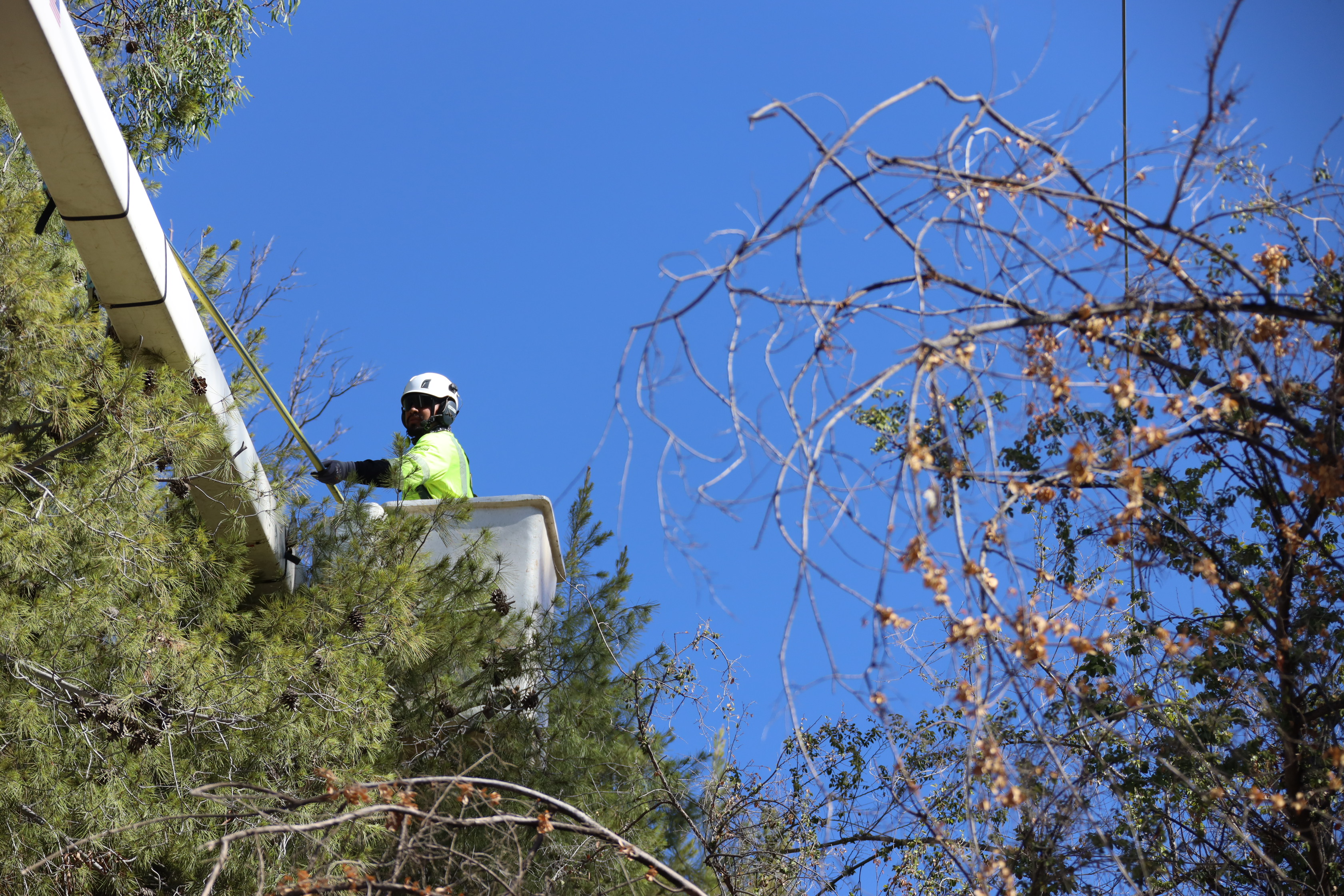
Keeping vegetation away from power lines can help prevent safety hazards, power outages and wildfires.
Branches that get too close to power lines can create safety hazards, cause outages and increase the risk of wildfire. That is why SCE inspects trees near its electrical equipment and contracts specially trained crews to trim vegetation that could pose a threat.
“Anytime a tree is within 10 feet of power lines, you need somebody who is line-clearance qualified and approved by SCE to handle it,” said Anthony Kikuchi, an SCE senior specialist in Vegetation Management and Forestry. “It can’t be just any trimmer.”
At Escalera’s property, Kikuchi and other SCE vegetation management experts oversaw crews as they evaluated each tree — pine, eucalyptus, pepper and more. Some trees required removal, the safest option when trees are too large, brittle, fast-growing or don’t respond well to pruning. Others were carefully trimmed back from power lines, all at no cost to the customer.
“What some people don’t think is a big deal is a big deal to us because we take our jobs to protect communities seriously,” Kikuchi said. “We’ve seen the dangers of people or vegetation coming into contact with power lines. It takes trained crews, careful planning and cooperation from property owners like Eddie to get this important work done.”
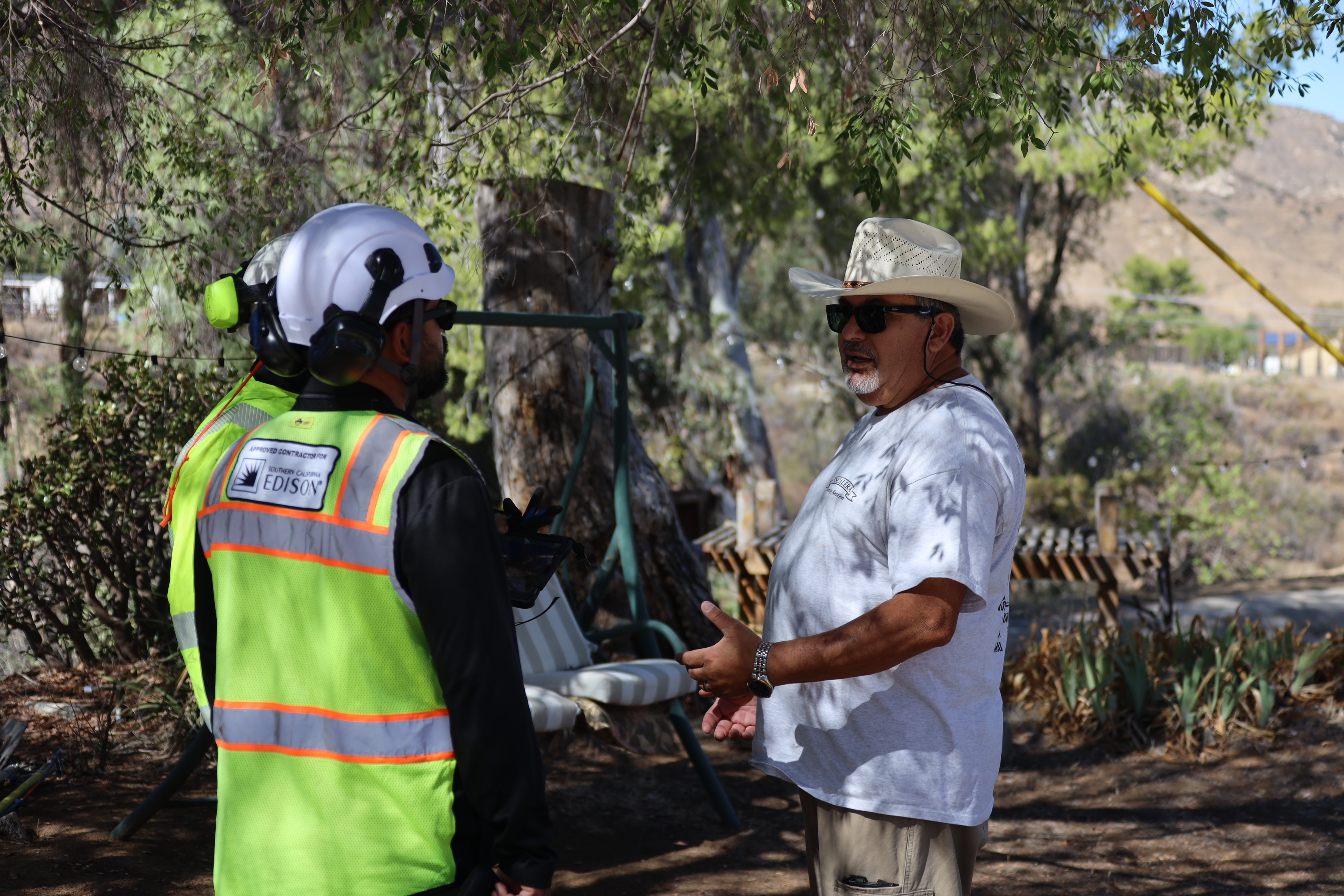
Cooperation from property owners like Eddie Escalera helps SCE and its contracted crews complete important safety work near power lines.
In high fire risk areas like Reche Canyon, that diligence takes on added importance. After a summer filled with triple-digit temperatures, Escalera noticed dozens of trees and other plants across his property becoming much drier.
“It feels like being in a microwave, and that level of heat affects everything it touches, including the trees,” Escalera said.
Strong winds are another concern. Dry or overgrown branches can break, bend or blow toward nearby electrical equipment.
For Escalera, who now works in public safety at the University of Redlands, safety is a group effort. He sees keeping his property maintained as part of his responsibility to his neighbors and the surrounding community.
“You hear about fires and how they started, and they can come from anywhere,” he said. “If we can prevent something from happening, why wouldn’t we?”
If you think your trees are ready for a trim, follow these safety tips:
- Before trimming any tree, always check for nearby power lines, including the service line to your home or business.
- If trees are near power lines, call SCE at 1-800-655-4555 before starting any work. SCE will conduct a vegetation clearance inspection, and if trimming is needed, SCE will send an approved contractor at no cost to you.
- Through SCE’s Make Safe program, an approved contractor can trim trees a safe distance from power lines so your qualified arborist can complete additional work.
- Never trim, remove or hire someone to trim trees near power lines. Only SCE-approved contractors should work within 10 feet of overhead power lines and equipment.
- Always treat power lines as energized and dangerous. Any contact with a power line can cause serious injury or death.
- Never touch or move a power line, including low-voltage service lines that run from utility poles to buildings.
To learn more about SCE’s vegetation management programs, visit sce.com/powerlines.